Gundam First Strike: who deals battle damage first?
On this page
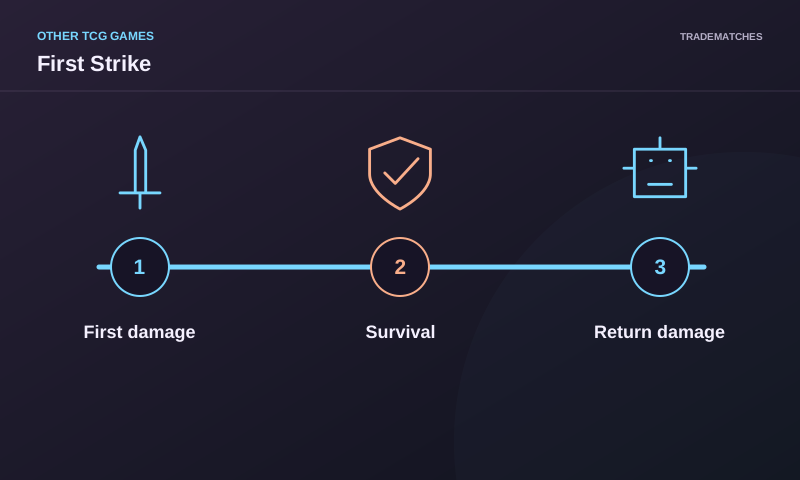
First Strike in the Gundam Card Game lets an attacking Unit deal battle damage before the enemy Unit or Base. If that early damage destroys the opposing battle participant, the attacker does not receive its battle damage. If the opponent survives, it can still deal damage back at the ordinary point.
The word “attacking” is essential. A defending Unit does not gain the same timing advantage merely because First Strike is printed on it. This guide explains the damage sequence with simple examples and separates the keyword from blocking restrictions, attack power and general protection.
The current definition is attacker-specific
The official comprehensive rules, section 13-1-5, define First Strike in relation to an attacking Unit's battle. They describe dealing its damage first and the consequence if that damage destroys the enemy Unit or Base.
Without the applicable keyword, the ordinary relevant battle damage is simultaneous. First Strike changes that ordering for the attacker. It does not independently increase the amount of damage, heal previous damage or make the Unit untouchable by Command effects.
When reading a board state, identify who is attacking before comparing keywords. A player familiar with another game's similarly named ability can otherwise apply an incorrect defending benefit. Shared vocabulary between card games does not guarantee identical rules.
A simple lethal-damage example
Imagine an attacking Unit with 3 AP and First Strike. Its legal opposing Unit has 3 remaining HP and 4 AP. Assume no other effects change the battle. The attacker deals three battle damage first, destroying the enemy Unit. The destroyed opposing Unit does not then deal its four battle damage back.
The example uses remaining HP because previous damage matters. A printed HP value alone does not establish how much more damage the Unit can survive. Review its existing damage and any applicable modifiers before deciding that First Strike is lethal.
This is the keyword's clearest benefit: an attacker can survive a battle it would otherwise lose under simultaneous damage. The benefit comes from destroying the enemy before its return damage, not from a separate rule that prevents every source of damage for the rest of the turn.
Surviving targets still deal damage
Change the same example so that the enemy has 4 remaining HP. The attacker's three early damage does not destroy it. The surviving opposing Unit then deals its relevant battle damage. If that damage is enough to destroy the attacker, First Strike does not save the attacker merely because it went first.
This is why attack power and remaining HP must be checked together. First Strike provides a timing advantage, but the advantage only removes return battle damage when its early damage produces the required destruction.
| Illustrative attacker and target | Damage-order implication |
|---|---|
| First Strike attacker deals enough to destroy the enemy | Enemy does not deal its return battle damage |
| First Strike attacker deals less than the enemy's remaining HP | Surviving enemy still deals battle damage |
| Unit with First Strike is defending | Do not grant the attacker-specific timing benefit |
| A Command changes AP or HP before damage | Recalculate the relevant values before applying the sequence |
| Enemy Base is destroyed by the early battle damage | The destroyed Base does not deal return battle damage |
These are simplified calculations, not card-specific rulings. Actual modifiers, effects and legal battle targets remain relevant.
Why defending is different
Suppose your Unit has First Strike and an opponent legally attacks it. Your Unit is now the defending participant. Its own keyword does not automatically move its damage ahead of the opponent's under the Gundam definition.
If the opposing attacker lacks an applicable First Strike benefit, use the ordinary damage process. If the opposing attacker has it, apply that attacker's keyword correctly. Do not create a special tie-breaker based on both cards displaying the same words.
This distinction affects turn planning. A Unit that can attack favourably may still be vulnerable when attacked later. Evaluate its defensive position using the actual defending rules, remaining HP and other protection rather than assuming its offensive timing advantage persists in every battle.
First Strike does not stop Blocker
The keyword concerns damage timing. It does not independently prohibit an enemy Unit from activating Blocker. The current rules define High-Maneuver separately as a keyword affecting opposing Blocker activation while its Unit attacks.
If an opponent can legally block, assess the new battle participant and its remaining HP. Your early damage may destroy that blocker or may leave it alive to deal damage. The original target's values are no longer the only values relevant to the plan.
An illustrative attacker with 3 AP may comfortably destroy a target with 2 remaining HP but fail to destroy a legal blocker with 5 remaining HP. First Strike still changes the order, yet it does not guarantee the originally expected survival or damage outcome.
Damage modifiers need their proper timing
Commands and abilities can change the values or conditions of a battle when the rules permit them. Resolve the applicable action sequence before calculating the damage step. Do not calculate lethal early damage from an outdated AP or HP value after an effect has changed it.
For example, a legal effect reducing the attacker's AP before damage can turn a previously lethal First Strike hit into a nonlethal one. The opponent may then survive to deal damage back. Conversely, an applicable increase can make the early damage lethal.
Use current values at the appropriate step. First Strike does not lock in your original mental calculation when you declare the attack. The official FAQ is useful for checking the actual card interactions behind a complicated battle.
Battles that perform only the damage step
The comprehensive rules explicitly retain First Strike when an effect begins a battle and performs only the damage step. Do not assume that skipping other battle steps automatically removes the keyword's damage-order function.
However, that specific rule does not create a new ordinary attack declaration or every trigger associated with a full attack sequence. Read the effect creating the battle and follow the steps it instructs you to perform.
When explaining such a situation, name the effect first. “These Units are fighting” is too broad if the battle was produced by a special instruction. The difference between a normal attack and a damage-step-only battle can matter for abilities beyond First Strike.
Base battles and other damage are separate
When the opposing battle participant is a Base, apply the relevant Base battle rules and First Strike's destruction consequence. Do not extend that description to every Shield interaction or every kind of direct damage in the game.
Likewise, damage dealt by a Command is not automatically early battle damage from the attacking Unit. The source and operation of the damage matter. An effect can remove a Unit before the damage step without becoming a First Strike event.
For a practical calculation, establish the actual battle participant, its current relevant values and whether the incoming early battle damage destroys it. If a different effect changes the situation, resolve that effect under its own text rather than attributing the result to the keyword.
Planning a turn around the timing advantage
Before attacking, compare your AP with the target's remaining HP and the possible legal blockers. Then check whether surviving the battle leaves the Unit able to serve a useful role afterward. An advantageous battle does not automatically make every attack worthwhile.
Consider what happens if the enemy survives by one HP. Can your attacker withstand return damage? Does another necessary action rely on it remaining in play? A plan built only around the best-case lethal calculation can collapse after a small legal modifier.
For practice, use the same attacker against targets with two, three and four remaining HP. Apply the early damage, remove a target only if it is destroyed, and then handle any return battle damage. Repeat with the First Strike Unit defending. The comparison makes the attacker-only scope much clearer.
Frequently asked questions
Does First Strike work when my Unit is attacked?
Its Gundam definition applies while that Unit is attacking. Do not give a defending Unit the same benefit solely because it has the keyword. Follow the actual attacker's abilities and the normal damage process.
Does the enemy deal damage if it survives the first hit?
Yes, the surviving enemy battle participant still deals its relevant battle damage at the appropriate step. The keyword removes return battle damage when the early damage destroys that participant, rather than preventing it unconditionally.
Can the keyword stop a blocker from intervening?
First Strike does not itself prohibit Blocker. It changes battle-damage order. Check blocking permissions separately, then calculate the battle against the participant that actually receives the attack.