How to build a Have list that creates better matches
On this page
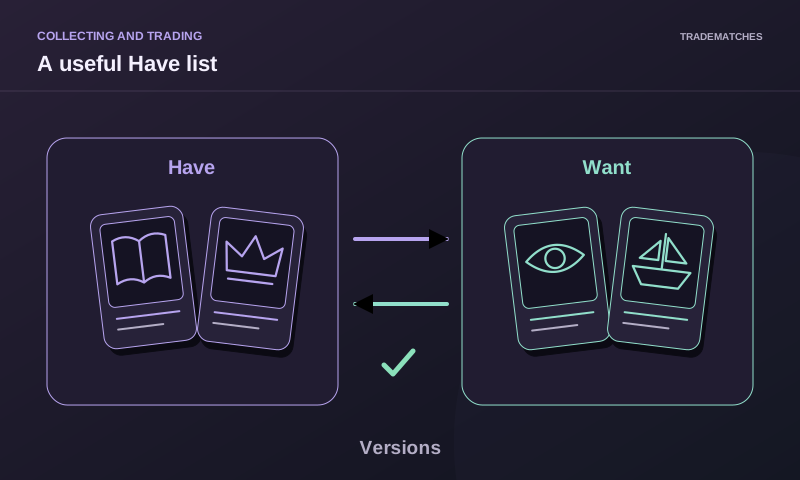
A “Have” list produces better matches when it represents exactly the cards you would trade now. Quantity does not guarantee results: twenty accurate, locatable entries usually start better conversations than hundreds of cards posted without a clear version or condition.
Make three groups before listing
Separate your permanent collection, cards you are still considering, and trade stock. The first group never appears in the app; the second waits until you decide; the third contains only cards you can show and hand over. This physical or mental split prevents a common disappointment: a match asks about a card and learns it was never available.
A card need not be a duplicate to join the lot. It might be an alternate version that no longer fits your goal, a card from a game you have left, or an appealing piece you would rather turn into several missing cards. What matters is that the decision is genuine, not the label attached to the card.
Check details that change a trade
A name does not always identify a card. Two copies may come from different sets, carry different collector numbers, use another language, have a different foil treatment, or be in a different condition. Read the physical card when creating an entry; an old photo or your memory of opening a pack cannot replace that check.
| Detail | How it helps a match |
|---|---|
| Set or edition | Prevents confusion between reprints, promos, and alternate art. |
| Language and finish | Lets someone seeking a variant decide whether to contact you. |
| Condition | Stops edges, corners, and surface from becoming a surprise at a meeting. |
| Quantity | Clarifies whether you offer one copy or a small lot. |
When there is a flaw, describe it without exaggerating or concealing it. “Light mark on the top edge” is more honest than “good condition” when the mark exists. If an image adds clarity, show the flaw directly; our guide to photographing card flaws explains how to do that without creating confusion.
Add variety to the lot, not noise
A manageable lot can contain cards with recognisable demand, duplicates that complete a deal, and highly specific cards from a game or set. The first can begin a conversation; the second can balance a trade; the third connects you with someone who shares a precise goal. You do not need to predict the most wanted card. The other person needs to understand what you offer.
Do not upload an unsorted box as one vague entry. If you have many low-rarity cards, group them only when you can describe the contents—commons and uncommons from one expansion, for example—and list meaningful versions individually. This keeps another collector from having to begin by asking what is actually there.
Keep the list in step with your cards
List only what you can update. After a trade, remove outgoing cards; if you change your mind, remove a card before an offer arrives. Set aside a few minutes after opening packs, organising a binder, or returning from an event to review affected entries. A small active list inspires more confidence than a huge one ignored for months.
If you need to shrink it, start with badly identified cards, cards you cannot locate, and cards you would no longer move. Rebuilding from a precise core is easier than repairing a whole list full of uncertainty. Pair the work with a specific want list: useful matches need both halves of the profile to be current.
One-minute review before activating
- Can I find this card without searching my whole collection?
- Do edition, language, and condition describe the physical copy?
- Would I truly trade it this week?
- Have I removed copies already traded or reserved?
If any answer is no, correct it before publishing. That brief review does more for your matches than adding many new entries at once.
When a card attracts interest
When a question arrives, do not turn the listing into a public negotiation. First confirm you still have the copy and check the recorded details again. Then share a photo if condition or version could be unclear. If several people ask about the same card, leave the entry available until you have agreed a specific trade; once a copy is reserved, stop offering it. This order protects everyone from simultaneous proposals that cannot all be honoured.
The list is not meant to price cards automatically or replace a conversation. Its job is simpler: allow the right people to know what they can ask you about. The more faithfully it reflects the physical binder, the fewer messages you will need to clarify and the easier it becomes to reach a sensible trade.
This approach also avoids comparing a personal profile with a professional inventory. A clear, current personal list does its job perfectly: it shows what is available so the next contact begins with reliable information.
Your Have list is not a museum inventory: it is a selection of cards you would be happy to move. If another collector cannot tell which version you own or what condition it is in, the match loses momentum before it begins.
Check quantity before listing
Of five copies of a version, three in a deck and one promised leave only one free. Keep that calculation in your inventory even if the app has no reservation field. Identify the printing first and clarify details in chat so ownership is not confused with availability.
Physically check cards that attract interest. Withdraw an offer if you cannot locate its copy. Substituting a worse-condition copy requires a new confirmation even when the name is unchanged.