Cycling in Magic: ability, discard and responses
On this page
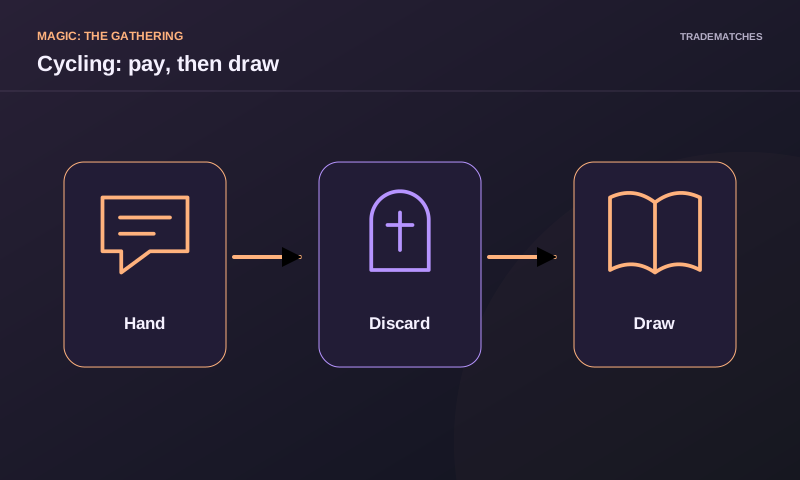
Cycling is an activated ability used from your hand. Pay its cost and discard the card; the ability draws when it resolves. You are not casting the discarded card. Typecycling variants can search for a specified card type instead of performing an ordinary draw.
Source · Cycling in Magic: ability, discard and responses.
Discard before drawing
Announce the ability and pay its costs. The card leaves your hand as part of payment, before you receive the replacement draw. You cannot draw first and then decide whether to discard. Nor can you use ordinary cycling from the graveyard just because the card still has that text.
For a hypothetical card with cycling two and exactly two available mana, activating spends both the resources and the card. If a response prevents the draw, those paid costs are not automatically refunded. That possibility is part of the decision.
Cycling is not a spell to counter
The ability uses the stack but is not a spell. An effect limited to countering spells does not stop cycling merely because it can respond. An effect that can counter an activated ability still needs an appropriate legal target.
After activation, the cycling card has already been discarded. An opponent cannot retroactively stop that paid cost by removing the card from your hand in response. Acting before you activate, during an appropriate opportunity, is a separate situation.
Keep cycling triggers separate
Some cards have an additional ability triggering when cycled. Identify the activated ability and triggered ability separately rather than merging their instructions into one draw.
Countering the draw ability does not automatically remove a separate cycling trigger. Examine its own targets and text. Likewise, a trigger worded for cycling or discarding does not trigger twice merely because cycling contains a discard.
Landcycling is a search, not a random land draw
Typecycling changes the result of the ability. Search for the specified type, reveal the selected card and complete the instructions, including the required shuffle. Do not substitute revealing the top card or selecting an unrelated card with a similar name.
| Ability or interaction | Question to answer |
|---|---|
| Ordinary cycling | Can I pay, and do I want a replacement draw? |
| Land-type cycling | Which exact type can I search for? |
| A cycling trigger | Is it mandatory, optional or targeted? |
| An opposing response | Does it affect spells, abilities or graveyard cards? |
Read the actual land type. Basic landcycling and cycling for a particular subtype need not have identical legal search results.
Compare the result you actually need
Separate gaining another draw from fixing a resource through a search. Ordinary cycling may draw something that does not solve a missing colour. Typecycling can supply a specific eligible land if one is available, but that is a different result.
Practise with a hand in which the cycling card would also be useful as a spell. Record the card you give up, the mana spent and the result needed. This makes the decision understandable without claiming cycling is always the best use or that a purchase improves every deck.
Discarding a cycling card is not automatically cycling
Cycling includes discarding its own card as a cost, but the reverse is not true. Another instruction making you discard a card with cycling does not automatically activate that ability. The appropriate announcement and payment must occur.
Record the cause when checking triggers: cycling activation, another discard instruction or a different cost. A trigger mentioning discard can cover events different from one mentioning only cycling. A shared physical destination does not erase the written condition.
Three practice sequences
First, cycle without a response and record payment followed by drawing on resolution. Second, use a legal response stopping the ability, retain paid costs and check separate triggers. Third, discard a cycling card under another instruction without adding an unactivated cycling draw.
All three can leave a card in the graveyard, but their sequences differ. Record stack objects and resolved effects. This explains differences without universal claims about unexamined card text.
For a deck with discard-related triggers, retain a list of their conditions while practising. Match each to the actual event rather than calling everything a draw engine. This supports choosing when to replace a hand card and when to preserve its other use.
Frequently asked questions
Does cycling count as casting a spell?
No. It activates a hand-based ability and pays its costs, including discarding.
Is the card returned if the ability is countered?
Not automatically. Discarding was already paid as a cost, and stopping resolution does not undo it.
Can I cycle whenever I could use an instant?
Activated abilities normally require priority and can use those windows. Check any specific timing restriction or effect preventing activation.