Scry and surveil in Magic and where cards go
On this page
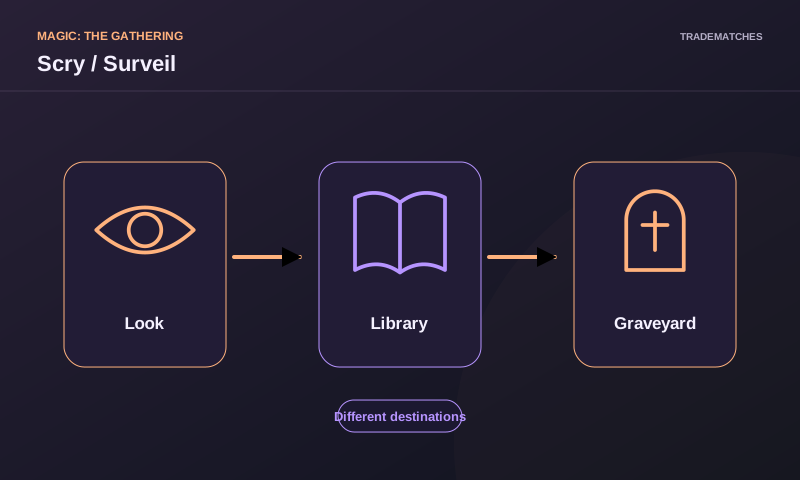
Scry and surveil both let you look at cards from the top of your library and choose which to leave there. Their difference is where the rejected cards go: scry puts them on the bottom of the library, while surveil puts them into your graveyard. Neither action draws cards by itself, and surveilling is not discarding from your hand.
Two actions with different destinations
The comprehensive rules effective September 25, 2026 define scry in section 701.22 and surveil in 701.25. Consult the numbering used by the document you are reading. An older rules version can place a familiar action in a different section without that making its explanation the current reference.
If you play with Spanish cards, scry is called adivinar and surveil escrutar. The official Spanish Guilds of Ravnica mechanics article compares them using those names. Recognising the translated terms helps avoid treating the same action as a different mechanic when opponents use cards printed in different languages.
The number following the action states how many top cards to look at. Scry 2 and surveil 2 each examine the top two cards if available. That does not require you to reject two cards. You may keep all of them on top, move all to the alternative destination, or split them between the permitted destinations.
Performing scry
Look at the top N cards of your library without showing them to the opponent unless another instruction requires it. Choose any number to place on the bottom in an order you select. Return the rest to the top, also in any chosen order. Only those looked-at cards participate; you cannot add a card from your hand to the selection.
For example, scrying two might reveal a land and an expensive spell to you. If you need the land next, leave it on top and put the spell on the bottom. If you want both, choose which will be drawn first. If neither is useful soon, you can put both on the bottom instead.
The bottom of the library is not a discard zone. Those cards remain in the library and could appear later as you progress through it or after a shuffle. You have changed potential future draws without increasing your hand size or putting those cards into the graveyard. That distinction affects both card availability and triggered abilities.
Performing surveil
Look at the top N cards and choose any number to put into your graveyard. Return the others to the top in your preferred order. Unlike scry, rejected cards leave the library for another zone. That change can matter to your own effects, an opponent's effects and what cards remain available to draw normally.
Suppose you surveil two and see a land plus a creature you can later recover from the graveyard. You could keep the land on top and put the creature into the graveyard. This is an example of a useful choice, not a requirement. If you cannot recover the creature or need to draw it normally, keeping it may make more sense.
Surveil does not itself grant permission to cast a card from the graveyard. Another rule or effect must supply that permission, and its costs and restrictions still apply. Preparing a resource and being allowed to use it are separate steps. The action's definition only tells you how the selection and movement happen.
| Operation | Cards you keep | Cards you reject | Adds cards to hand? |
|---|---|---|---|
| Scry N | Top, in your chosen order | Bottom of the library | No |
| Surveil N | Top, in your chosen order | Graveyard | No |
| Draw a card | No selection split from drawing alone | Top card moves to hand | Yes |
The order relative to drawing changes the result
Read the complete spell or ability. “Scry 1. Draw a card” lets you examine and select first, then draw the card left on top. “Draw a card. Scry 1” first moves the existing top card into your hand and only then prepares a future draw. The same words appearing in a different order describe different sequences.
Surveil works similarly. If it precedes drawing, your choice can change which card you draw during that resolution. If it follows drawing, it does not retroactively change the card already received. Do not rearrange instructions because you would prefer to see another card before deciding which to keep.
Imagine an expensive spell on top with a land underneath. Scrying one before drawing allows you to move the spell away and draw the land. Drawing first gives you the expensive spell, and the later scry examines the land now on top. The difference comes from the written sequence, not from two versions of scry.
Looking, revealing and discarding are different
Scry's look instruction does not show those cards to your opponent. You can state how many went to the bottom or remained on top without identifying their names. Avoid accidentally turning the selection face up while deciding. If another part of the effect tells you to reveal cards, follow that additional instruction at its appropriate point.
Cards surveilled into the graveyard normally become public there. The cards returned to the top are not revealed for that reason. Do not expose the entire selection merely because one card is going to a public zone. Resolve each card's destination, then maintain the information visibility appropriate to that zone.
Discarding concerns cards moving from the hand under a discard instruction. Surveil moves cards from the library. An ability triggered by discarding does not trigger merely because you surveilled something into your graveyard. Likewise, looking at cards and ordering them is not a draw event for an ability watching you draw.
Abilities triggered by scry or surveil
A card may explicitly trigger when you scry or surveil. Which action you performed matters, even if you kept every looked-at card on top and the visible library result resembles the other action. Similar physical outcomes do not make the rules events interchangeable for every ability.
Such triggers do not resolve halfway through your selection. If a spell includes surveil and additional instructions, finish resolving the spell before processing triggered abilities as required. Your opponent also does not get an opportunity to respond between looking at a card and choosing its destination within one resolving action.
The rules specify that scry 0 and surveil 0 do not produce their respective events. You cannot use zero to trigger an ability that requires that action. For a positive number, the definitions and trigger rules also cover circumstances where some actions are impossible. Consult the exact interaction if very few cards remain in the library.
When fewer than N cards remain
If instructed to examine three cards with only one card left, work with the available card. You do not create two additional cards or look at your hand to make up the shortfall. Looking is not converted into an unsuccessful draw merely because the requested quantity is unavailable. The game distinguishes these operations.
After deciding, track where the remaining card went. Leaving it on top preserves it for a later draw. Surveilling it into the graveyard leaves the library empty. The filtering action does not remove the consequences of a later instruction that actually requires drawing. Assess the whole sequence with the cards that remain.
Shuffling and replacement effects
Filtering arranges the library as it currently exists. If a later effect shuffles it, you should no longer assume your selected card remains on top or that a rejected scry card is still on the bottom. Check whether a planned search or another subsequent action includes a shuffle that removes your preparation.
The graveyard is not necessarily the final destination of a surveilled card either. A replacement effect may change a movement that would put the card there. Read what it replaces and whose cards it affects before expecting graveyard access. Changing a result does not make the original surveil action become scry.
For a complicated situation, record the instruction, available card count, chosen destinations and any replacement effect. Then add relevant triggers. This order separates selection decisions from consequences handled later and gives both players a precise account of the interaction rather than an informal description that everything happened at once.
Choose destinations to support the next real play
If your deck needs a particular card next turn, prioritise the draw that actually advances your position. Leaving two good cards on top without deciding which you need first can delay the second through a crucial turn. Both actions permit ordering, so use that choice with the resources currently available.
With surveil, assess whether putting something in the graveyard genuinely helps. A possible synergy does not require sending every creature there. Check whether you can use it, whether the opponent restricts that zone and what you lose by no longer drawing it normally. The mechanic provides choices rather than a universal strategy.
Frequently asked questions
Does surveilling count as drawing a card?
Surveil itself does not put cards into your hand. If the effect also contains a draw instruction, resolve that draw separately in the written order.
Must I move at least one looked-at card away?
Both actions let you choose any number of those cards for the alternative destination. You can leave all on top while following ordering rules and other applicable instructions.
Can I cast a card while looking at it?
Looking supplies no casting permission. Complete the selection action, then use any independent permission that actually allows you to cast the card at a legal time.