DON!! −X in One Piece: paying the cost
On this page
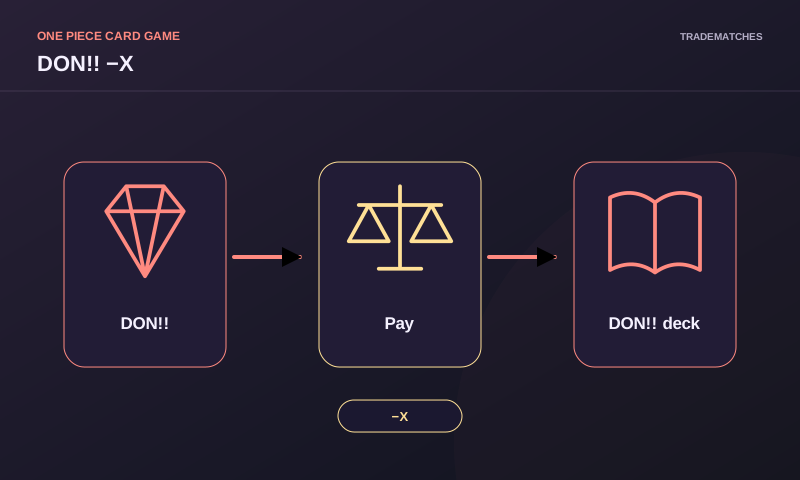
DON!! −X in One Piece Card Game means you must return exactly X DON!! cards from your Leader zone, your Character zone, and your cost area back to your DON!! deck. This is a cost or condition stated by the card; it does not mean resting X DON!! or discarding them to the trash. If you cannot return the required amount, you cannot pay this cost normally and the effect must not be resolved as if the cost had been paid.
What does the DON!! −X symbol indicate?
The X represents the number of DON!! that are returned to your DON!! deck. A card showing DON!! −2 requires two, not "up to two" or "two or more." Selection can combine DON!! from the allowed zones. The rules text mentions the Leader zone, the Character zone, and the cost area. It does not include your hand, your main deck, or a hypothetical reserve outside the game. To pay, count only DON!! cards that are actually in those zones and that you can legally select.
For example, you have one DON!! attached to your Leader, one attached to a Character, and two in the cost area. If an ability requires DON!! −2, there are several possible combinations: return the two from the cost area, return one from there and the one from the Leader, or return the two that were attached, as long as no additional text restricts it. The choice can affect your attack power and the resources remaining. The symbol specifies the total amount, not a single source.
The destination is your DON!! deck
The selected cards do not go to the trash or your main deck. They return to your DON!! deck. This zone contains DON!! cards that are not currently in the cost area or given to cards in play. In future turns, the DON!! phase may place cards from this deck into the cost area according to the rules. Returning them now does not automatically move them back to the cost area at that instant; only a specific effect text would indicate such a movement.
On the board, physically move the returned DON!! to their correct zone before applying the subsequent result of the cost. This action prevents counting certain resources as available after they have been returned. If there are many DON!! on the board, announcing "I return one from the Leader and one from the cost area for DON!! −2" clearly indicates your selection. Simply rotating or pointing at them with a finger is not sufficient; the symbol orders an actual zone change.
Active, rested, and attached DON!!
The cost area may contain both active and rested DON!!. DON!! given to the Leader or a Character are under those cards and, according to the full rules, are neither active nor rested while given. Therefore, DON!! −X is not well explained by the phrase "spend X active DON!!." The official text speaks of selecting DON!! from the indicated zones and returning them, and does not itself require an active state.
This distinction is especially useful when you have already played cards this turn. Paying the cost to play a Character normally rests active DON!! in the cost area; those DON!! do not leave that zone simply by paying the cost. A DON!! −X ability, in contrast, returns them to your DON!! deck if you choose them to fulfill the cost. A rested DON!! in the cost area may still be selectable for DON!! −X by the general rule, while it might not be able to pay an action that requires resting an active DON!!. Read both costs as separate operations.
It is not the same as resting DON!!
One Piece uses distinct symbols and texts for different costs. A symbol that requests resting active DON!! in the cost area changes their orientation but keeps them there. DON!! −X reduces the number of DON!! present in the allowed zones and returns them to the corresponding deck. If you apply one operation instead of the other, you may end up with more resources on the board than you should and resolve an effect illegally.
Suppose you have three active DON!! in the cost area and a card requires DON!! −2. If you place two in horizontal orientation, you have not paid the required amount: they still remain in the cost area. You must select two and return them to your DON!! deck. If the card had required resting two active DON!!, then returning them to the deck would also have been incorrect. When learning a new card, say the verb of the action and move the cards to the actual zone indicated by the text; the visual similarity between costs does not substitute for their instructions.
What happens if you return DON!! given to a Leader or Character?
During your turn, each DON!! given to the Leader or a Character grants 100,000 power according to general rules. If you select one of those DON!! to pay DON!! −X, it is no longer attached to the card and returns to your DON!! deck. The card no longer receives the bonus power from that DON!! for the remainder of the situation. This may change if an attack exceeds the opponent's power or if an effect depends on how many DON!! are given to a card.
Example: Your Leader has two DON!! given to it and, during your turn, receives 200,000 additional power. If you return one to pay DON!! −1, only one remains attached and the corresponding general bonus drops to 100,000. Do not subtract printed power or assume that the returned DON!! stays attached until the end of the attack. If a specific text fixes another check point or adds a modifier, resolve it according to that text. The action of returning the DON!! is real, not merely accounting.
Choosing where to return is a strategic decision
When there are several legal combinations, preserve the resources that are most important for your turn plan. If you want to attack with a strengthened Character, you might prefer to return rested DON!! from the cost area rather than removing those attached to that attacker. If you need to play another card that requires active DON!!, you should not return the last active DON!! without evaluating the next cost. And if an effect depends on how many DON!! your Leader has given, review that condition before selecting those under it.
There is no universal answer "always return rested DON!!." A specific card may require returning DON!! from a particular source, or it may reward you for returning one attached by a subsequent sequence. The specific text commands the action. A useful planning method is to order your actions before paying: attack, card you want to play, and DON!! −X ability. Simulate how your cost area looks and what bonuses are lost after each step. If the result does not allow you to complete the sequence, change the order before moving cards.
What happens if you have fewer DON!! than required?
If an ability requires DON!! −3 and only two DON!! are selectable among your Leader, Characters, and cost area, you cannot pay three by returning two. X is an exact amount. The normal consequence is that you cannot activate an effect whose cost you cannot pay in that way. If a card includes text that substitutes or modifies the payment, analyze that exception separately; the general rule does not allow you to "remain in debt" to a DON!! for a future turn.
Before announcing the ability, count the DON!! on the board. DON!! already in your DON!! deck do not count as available for return: you cannot return something to a zone that already contains it. You also cannot count a card from your main deck or a marker as a DON!!. If you mistakenly pay partially and then realize you are missing one, do not resolve the effect as if the cost had been fully paid. Stop the play and reconstruct the sequence; in an event, ask the judge for a decision.
How does it affect the next DON!! phase?
During the DON!! phase, the rules place cards from your DON!! deck into the cost area: normally two, with the exception of the first turn of the player who starts, which places one. If only one remains in your DON!! deck, one is placed; if none remain, none are placed. Therefore, returning DON!! via DON!! −X may result in cards being available for a future phase. It does not mean the cost is free: you are giving up resources on the board and possibly attack power.
Imagine that at the end of your turn you have returned two DON!!. On your next turn, the rules first return to the cost area, rested, the DON!! that were given to your cards, and then activate the relevant rested cards. Later comes the DON!! phase, and cards from your DON!! deck are placed according to the available amount. This sequence shows why it's important to know from which zone each DON!! came: the ones that remained on the board follow a different path than those you already returned to your deck.
DON!! −X in an ability [Once Per Turn]
Some abilities combine a once-per-turn limit with DON!! −X as a cost. These are two independent restrictions: having enough DON!! does not allow you to reuse an ability you already used during that turn, and holding the use does not matter if you cannot pay the cost. First check the activation timing, then the availability of the ability, and finally the DON!! you will return. Clearly announce which card generates the effect and which DON!! you select.
The full rules contain details about activations whose cost is interrupted or cannot be completed. If you encounter such a situation with a [Once Per Turn] ability, do not assume you can try it a second time without consequences. The specific guide for [Once Per Turn] explains how the count works; for a specific card, the exact sequence of payment and the active text determine the result. Separating frequency and cost avoids confusing "I still have a use" with "I can resolve it."
Common mistakes and quick check
Common mistakes include sending DON!! to the trash, leaving it rested in the cost area, believing only active DON!! can be returned, counting a DON!! from your main deck as available, or keeping the power bonus of a DON!! that has already been returned. All stem from reducing DON!! −X to the imprecise idea of "spending X resources." The solution is to read the origin and destination written in the rule: Leader, Characters, or cost area to the DON!! deck.
Before resolving, say aloud: "I need to return X; I have these DON!! in allowed zones; I select these; after that, there will be so many under the Leader, so many under Characters, and so many in the cost area." Move the cards, review the power that changes, and only then apply the effect that follows the cost. This method takes only a moment and especially protects sequences where a Character will attack afterward. If a card introduces an exception, re-read it before using the general rule as a shortcut.
Frequently Asked Questions
Does DON!! −2 mean resting two DON!!?
No. It means returning exactly two DON!! selected from the allowed zones to your DON!! deck.
Can I return a DON!! attached to a Character?
Yes, the Character zone is included in the general rule. Once detached, it no longer provides the general power bonus to the card.
Do the DON!! return to the cost area immediately?
No, just because of the payment. They first go to your DON!! deck. A later phase or effect may move them back according to its own instructions.