How to start using TradeMatches to find card trades near you
On this page
To find useful TradeMatches trades, begin with a small group of cards you would genuinely hand over and a specific list of missing cards. You do not need to catalogue every card on day one. Pick a goal—finish a set page, find pieces for a deck, or move duplicates—and use it to decide what you add.
Choose a goal you can review
“I want Pokémon cards” does not let you assess an offer quickly. “I need eighteen cards from this expansion, with regular cards ahead of two specific illustrations” does. A play goal works as well: gather the remaining copies for a deck, replace worn cards, or turn surplus copies into cards you will use.
If your collection is large, start with one game. You will learn which details actually distinguish your cards and avoid suggesting that a partly-built list means every card is available. Add another game or binder when the first process is familiar.
Build an unambiguous “Have” lot
Your available list is not a complete inventory; it is a trading commitment. Include duplicates, cards you have already set aside, and versions you would move even if they are not duplicates. For every entry, check its name, collector number where relevant, edition, language, finish, and condition. Those details separate versions that can look identical in a search.
- Available: you can locate it and bring or prepare it.
- Under review: do not list it while you are deciding to keep it or need to inspect it.
- Unavailable: do not use it to start a conversation; it creates an expectation you may have to retract.
Use a simple test: if someone requested this card this week, could you confirm a photo and its condition without searching several boxes? If not, leave it out until it is organised. Our guide to organising a TCG collection can help keep a trade binder separate from the permanent collection.
Make your “Want” list matchable
A want list should describe the card you would accept, not an approximate idea. Add the game, set, and version. If language, finish, or a minimum condition matters, say so before starting a chat. Where you would accept several versions, enter them as alternatives. That gives another collector flexibility without hiding your preference.
Rank missing cards as essential, interesting, and “only if it fits.” This does not set prices or promise a deal; it avoids spending time on a card you no longer need. Remove or update a card immediately after acquiring it. A complete want list reduces exactly these dead-end contacts.
Use the local radar realistically
Proximity has a practical benefit: in an in-person trade, both people can inspect cards before agreeing. Keep active only an area where meeting is possible and suggest a convenient public place, such as a shop with play space or an open meetup. Do not share unnecessary personal details; agree on time and place when the proposal is clear.
The radar does not turn a match into an automatic agreement. It is a reason to compare lists. If you see few results, improve the accuracy of listed cards and missing cards first. Change distance only when travelling is genuinely possible. See how the TradeMatches local radar works to approach nearby matches sensibly.
Write an offer that can be checked
A good first message names one or two cards, explains what you offer, and asks about anything you cannot see. For example: “I saw you are looking for my card X. I am interested in your card Y; mine is Spanish and appears in good condition. Is yours the version from set Z, and how are the corners?” It assumes neither price nor urgency and gives the other person something concrete to inspect.
Before arranging a meeting, both people should confirm version, language, condition, and every item in the deal. If something changes, write a brief recap. That prevents arriving with a different card from the one expected. Afterward, remove outgoing cards and add incoming cards so the next match remains useful.
A simple first-week route
On the first day, list five to ten available cards and five missing cards. Then compare every entry with the physical card. When a match appears, suggest a small, checkable trade. After that first deal, correct your list. Repeating that cycle teaches you more about your collection than attempting to register everything at once.
Keep that first lot for a few days and note repeated questions. Those questions reveal the missing listing detail, not a need to add unchecked cards.
If a conversation does not become a deal, it is not a failure of the system. Check whether version, condition, priority, or simply different tastes caused it. That observation improves the next proposal without forcing you to accept an unsuitable trade.
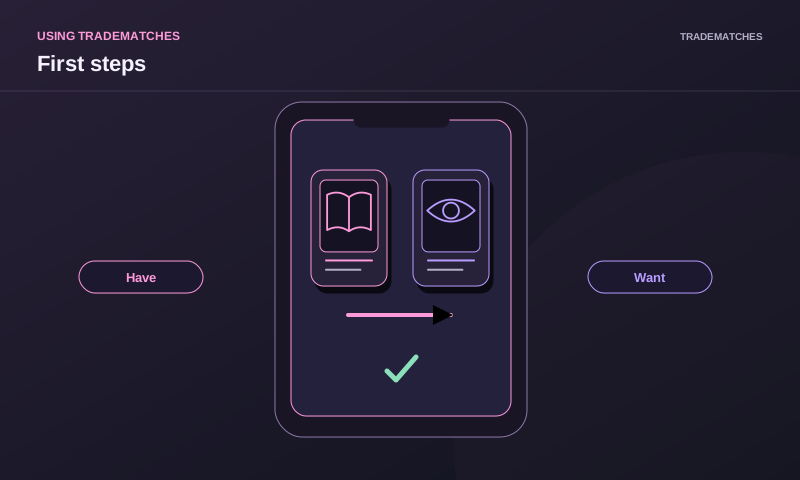
TradeMatches works best when your profile answers one simple question: which cards are available and which cards do you want. With those two lists, the app can show collectors whose interests fit yours.
A first session with a checkable result
- Choose five target codes you can identify on cards or through game references.
- Separate five physically available copies and compare them with your entries.
- Add wants and check language, number and variant against your goal.
- Explore a practical travel area and begin a specific conversation if lists overlap.
A correct inventory is a useful result even if no match appears. This guide does not promise available collectors, a completed trade or particular free allowances. Check current compatibility and terms in the official download listings.