How the TradeMatches local radar works
On this page
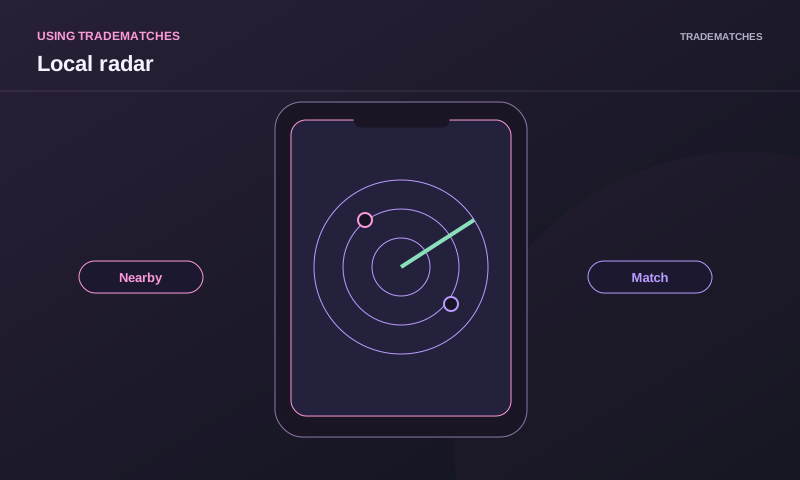
The TradeMatches local radar helps you discover collectors with compatible lists inside an area where a real trade would be possible. It is neither a promise of a deal nor a list of immediate availability. It reduces the distance between people who could inspect cards in person.
What the radar connects
Your lists are the starting point. For a useful overlap, a card available in your profile must interest another person and a card on their list must be among your wants. Proximity adds a practical condition: both people need to be close enough to consider meeting. That is why the radar works best with complete entries and a realistic area.
You do not need to share an exact location in an initial conversation. Treat the area as a viability filter, not a detail that must decide the final venue. Once a proposal is specific, you can choose a public point that works for both people.
Choose an area from your travel, not the count
A wider range may show more possibilities, but it does not make trades easier if you will not complete them. Begin with places you already visit: your neighbourhood, the area around a regular shop, a campus, or the route to a meetup. If the distance requires a special trip, be open about it before negotiating particular cards.
| Situation | Sensible approach |
|---|---|
| You can only meet near home | Keep the area small and maintain accurate lists. |
| You visit a shop weekly | Include that area and mention the possible day once a proposal is close. |
| You will attend an event | Review cards and wants beforehand; arrange the trade there, not a private location. |
| You live far from active communities | Do not promise travel; prioritise matches you can plan calmly. |
Prepare lists before reading too much into few results
A radar with no overlaps may reflect a small area, but it may also reflect an incomplete list. First check that you have added cards to both “Have” and “Want,” and that each has the correct version. A wrongly recorded reprint, language, or foil treatment can change the card another person sees.
List only cards you can locate and hand over. Adding an unchecked whole collection can create more contacts, but many will disappear when availability is confirmed. Our guide to building a Have list for better matches offers a way to clean the lot before widening the radar.
From overlap to proposal
An overlap begins a review; it does not finish one. Open the conversation with one or two cards found in both interests. Confirm version, language, finish, and condition, then suggest what you could offer. Avoid messages that assume a price, time, or venue. A small proposal is easier to check and adjust.
When you agree, write a recap: “I will bring X, in this version and condition; you will bring Y; we will meet in public place Z.” If any card changes, check the whole set again before travelling. This is especially valuable where a match involves several cards or similar names. For the next step, read how to turn a match into a trade.
Privacy and common sense when meeting
The radar does not replace personal safety decisions. For a first trade, choose a public space with other people nearby and share only the details needed. Bring only agreed cards and inspect them before handing them over. If something does not match what was discussed, it is fine to stop the trade.
A clear profile helps too: honest photos or descriptions, genuinely available cards, and respectful replies let proximity do what it is for—trading cards with less uncertainty.
A short routine before using it
- Update five available cards and five wanted cards.
- Check that you can locate the available cards.
- Activate only an area where you could meet.
- When a match appears, confirm details before discussing time and place.
This routine stops the radar from becoming a passive catalogue. With accurate information and an honest area, the matches you see are much more likely to become real trades.
When the radar shows an unexpected match
An overlap may come from a card you added some time ago. Before writing, locate it and confirm it remains available. Then check your want list to make sure the other person’s card is still a priority. This double check stops you opening a chat over past interest and lets the first message stay clear.
You do not have to answer every overlap with an offer. It is fine to use the information to update your binder, wait until you have other cards, or decide the journey does not work. The radar presents possibilities; a deal begins only when both goals and conditions fit.
Keeping that distinction clear also prevents disappointment: a nearby profile is a possible trading partner, not an obligation for either person. A respectful message and an accurate list are enough to explore whether the possibility is worth pursuing.
The local radar brings a digital match closer to a real trade. Instead of searching for buyers across the country, you can prioritise collectors with whom it is practical to arrange an in-person card check.
Separate distance, matching and availability
| What you see | What still needs confirmation |
|---|---|
| An approximate distance | A practical route and public meeting point |
| A card in their list | Current availability and the exact version |
| Overlapping lists | Condition, quantities and agreement on the lot |
A nearby collector may only be able to meet elsewhere. The displayed distance does not establish an exact location or oblige you to travel. Ask for a public area and time window, then confirm cards before planning the journey. Do not interpret distance as live tracking.