Ambush vs Raid in Star Wars: Unlimited
On this page
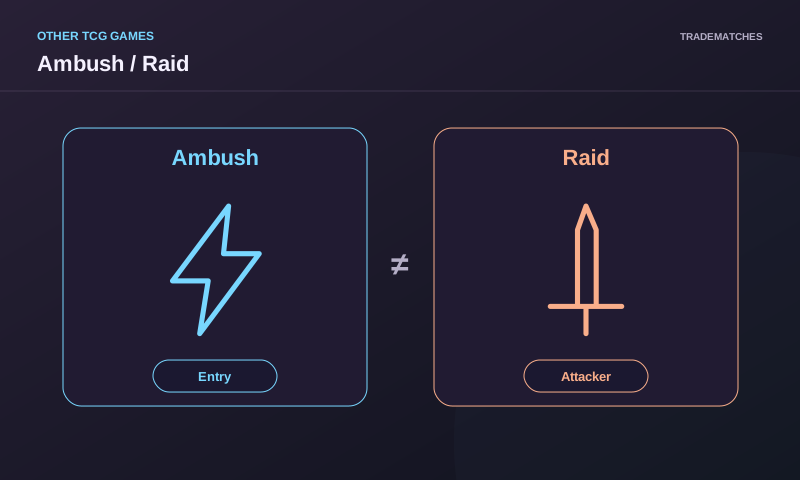
Ambush and Raid make a Star Wars: Unlimited unit more dangerous when attacking, but they resolve different problems. Ambush allows an attack against an enemy unit immediately after the unit enters the game, even if it enters exhausted. Raid X increases its power by X during the attack. A unit can have a word, both, or neither; you should not treat the power increase as permission to attack nor treat permission to attack as an increase in power.
The question each keyword answers
Ambush answers "Can this unit attack now upon entering?" Raid answers "How much additional power does it have while attacking?" The difference matters because normal units often enter exhausted and cannot immediately declare a regular attack. Ambush creates a specific opportunity, subject to the existence of a legal enemy unit. Raid, by itself, waits until the unit actually performs an attack permitted by the rules or by another effect.
Example: You play an exhausted unit with Raid 2 and no Ambush. Its printed power does not increase simply upon entering, and it does not attack immediately due to Raid. When, in a later turn, it can attack, it receives +2 power during that attack. If instead a unit has Ambush and no Raid, it could attack now against a legal enemy unit, but uses its normal power except for other modifiers.
How Ambush works upon entering
The rule defines Ambush as an ability that triggers when the unit is played, deployed, or created. If there is an enemy unit that this unit can attack, it may attack that unit, even if it is exhausted. The word "may" means the controller decides whether to take advantage of that opportunity; it does not require launching the unit into combat. The attack resolves normally and can trigger other attack-related abilities.
The unit with Ambush still enters exhausted like any ordinary unit without an exception for entry. The ability does not permanently fix this. Its special permission applies only to the attack offered by Ambush. If there is no legal enemy unit, the ability does not create an attack against the base as a substitute. A future card may add another permission, but the basic definition of Ambush points to an enemy unit.
Ambush does not attack the base by default
This is the restriction most often misunderstood. Ambush allows attacking an enemy unit; it does not say you can choose the base. Although the base may be a legal target for regular attacks, it does not become a permitted target under Ambush. If the attacker's arena has no enemy unit that it can normally attack, the unit remains exhausted and the Ambush attack does not occur. You also cannot move from ground to space if the attack rules do not allow it.
Example: You play a ground unit with Ambush against an opponent who only has space units. There is no ground enemy unit it can attack normally. The opponent's base exists, but Ambush does not make it a permitted target. If a specific card explicitly modifies where the unit can attack, that additional text applies; do not assume all cards with Ambush have this feature.
Ambush and "When Played" abilities
Ambush resolves in the same window as other "When Played" abilities of the unit. If multiple abilities trigger simultaneously, the controller follows the rules to determine the applicable order. The attack generated by Ambush is a nested ability: it can occur before other simultaneous abilities finish resolving if that order is chosen. Thus, damage, improvement, or removal caused by another ability can change which enemy unit remains available.
For a specific interaction, announce all abilities triggered upon entering and the order in which they will resolve. If you choose Ambush first, complete the attack before continuing with the others. If you choose another effect first, re-check whether a legal enemy unit remains available when it's Ambush's turn. The full rulebook explains the management of simultaneous abilities; do not reduce the case to "attack before anything else happens".
Multiple Ambush instances do not grant two attacks
A unit that gains Ambush from multiple sources cannot attack twice due to that duplication. The rule states that multiple instances of Ambush do not stack. This contrasts with Raid, whose values do stack. If an additional effect grants a different attack, it is evaluated by its own wording; duplicating the same Ambush keyword does not multiply the entry attack.
Example: A unit already has Ambush on its card and another ability grants it Ambush. It still has only one opportunity to attack due to that keyword. It does not gain a second attack after completing the first. This limit prevents redundant improvements from creating unexpected combinations. If you want to know whether the unit can attack again in the same phase, look for a different permission—another copy of Ambush is not sufficient.
How Raid X works
Raid X means the unit receives +X power while attacking. It does not increase its health and does not apply when defending. The increase begins during the attack at the moment specified by the rules and disappears when the attack ends. If a printed unit with 2 power has Raid 3, its power becomes 5 while attacking, without counting other modifiers. When defending, it returns to the value derived from its other effects.
As it is an attack power boost, it can affect the damage dealt to a unit or a base if the attack is legal. It does not change the number of attacks available or the target you can choose. An exhausted unit with Raid does not gain a recovery from receiving the keyword. If a unit loses Raid during an attack, its power is immediately adjusted to its new value for any remaining steps.
Multiple sources of Raid do stack
The rule specifies that multiple instances of Raid accumulate. Raid 1 from one source and Raid 2 from another functionally equal Raid 3 during the attack. This sum does not modify the printed power of the card and exists only during the attack phase. If one of the effects ends before damage is calculated, recalculate the total. If the unit gains another Raid during the attack, the power is adjusted to the new total at that moment.
Example: A unit has 3 power and Raid 1. An effect grants Raid 2 for this phase. When it attacks, it receives +3 power from Raid and reaches 6 before other adjustments. If one of those effects ends before damage is calculated, it rechecks its power. The safe way to resolve this is to list each active instance and sum their values, rather than relying on a potentially changed previous number.
Ambush and Raid on the same unit
Both abilities can be combined. A unit entering with Ambush and Raid 2 can take advantage of an immediate attack against a legal enemy unit and receive +2 power during that attack. Ambush provides the opportunity; Raid modifies the combat. The power increase does not make the base a legal target for Ambush. If the unit cannot attack any enemy unit, Raid remains without an attack to apply through this method.
Example: You play a ground unit 2/4 with Ambush and Raid 2 against an enemy ground unit. If you choose to attack with Ambush and there are no impediments, your unit will have 4 power during the attack. After the attack ends, its power returns to 2 unless other effects apply. If it survives exhausted, Raid does not cause it to attack again. If the opponent had a Sentinel in that arena, also check how it affects the target choice.
Interaction with Sentinel
Ambush does not say "ignore Sentinel." If the opponent has a unit with Sentinel in the attacker's arena, the target selection rules still apply. The special Ambush attack resolves like a normal attack, except for the specific permission to attack while exhausted and the timing of occurrence. Raid also does not help evade Sentinel; it only changes power. A unit with Saboteur might have a different permission, which is analyzed separately.
Imagine two enemy ground units—one with Sentinel and one without. Your new ground unit with Ambush may have to choose the first one for its entry attack. It cannot select the second simply because Ambush "surprises." If it also has Raid, the bonus applies to the combat against the chosen Sentinel. This combination shows that keywords answer different questions and that all relevant restrictions apply together.
Entering prepared is not the same as Ambush
Some cards or effects may allow a unit to enter ready. That could permit a regular attack when the player has the corresponding action, subject to rules. Ambush, in contrast, works even if the unit entered exhausted and provides a specific attack opportunity at the entry window. Both mechanisms can coexist, but they are not synonyms. It should not be confused to play a unit with the action of playing it versus the action of attacking generated by its ability.
To avoid confusion, place the unit in its correct state upon entering, announce any "When Played" triggers, and decide whether to use Ambush. If the unit enters exhausted and does not take advantage of that opportunity, it cannot attack later simply because it had Ambush. If it enters ready due to another effect, review what attacks that effect permits and what actions are available. Separating state, permission, and timing resolves most cases.
A quick check at the table
When playing a unit with Ambush, check the arena it enters, whether there is a legal enemy unit, whether there is a Sentinel, and what other "When Played" triggers have occurred. Decide whether to attack and follow all steps of the attack. For Raid, note the total active value and apply it during the attack; remove it when the attack ends. If an ability changes during combat, recalculate before applying pending damage.
The short rule is: Ambush opens an entry attack against an enemy unit and does not stack with itself; Raid X adds power during the attack and multiple values do stack. A unit with both can use both effects at once if the Ambush attack is legal. For doubts involving nested abilities or modifications mid-attack, consult the corresponding section of the official full rulebook.
Frequently Asked Questions
Does Ambush allow attacking the base upon entering?
No, by its basic rule. The attack it grants is against an enemy unit that the unit can attack; an exception requires another permission.
Does Raid increase power when defending?
No. Raid X adds power while the unit is attacking, and the increase disappears when the attack ends.
Do two Ambush or two Raid behave the same?
No. Multiple instances of Ambush do not grant multiple entry attacks; values from multiple instances of Raid do stack.
Official Source: Star Wars: Unlimited Comprehensive Rules v8.0, keywords Ambush and Raid.