Shield vs Experience in Star Wars: Unlimited
On this page
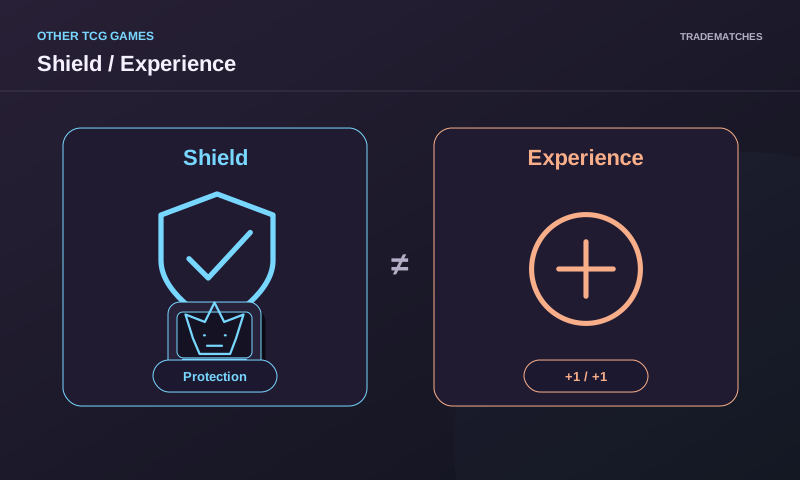
In Star Wars: Unlimited, an Experience card increases the stats of the unit it is attached to; a Shield card protects a unit from a damage occurrence that would otherwise be dealt to it. These are not two names for the same improvement: Experience makes a unit stronger by increasing its attack and resistance, while Shield prevents damage and typically is sacrificed when used. A unit can have both. To resolve an attack, first identify the current power and health values, then check if there is a Shield present and whether any keyword or effect prevents it from functioning. This sequence avoids both reducing damage that never actually occurred and leaving a card that should have been discarded.
What Experience Provides
An Experience card is a unit upgrade. The general rule gives +1 power and +1 health. Two cards provide double that modifier while remaining attached. If a unit printed as 3/3 gains an Experience card, it functions as 4/4 for power and health effects; with two cards, it functions as 5/5, unless overridden by other modifiers. This is not healing. If the unit already has damage, that damage remains; what changes is the health threshold and the power with which it can attack or fight.
The power increase can matter in two places. When attacking a base, it increases the damage the unit would deal if no other effect intervenes. When attacking a unit, it may cause a defeat or result in excess damage to trigger Overwhelm. The health increase matters when the unit is defending or receiving damage from events. A unit with Experience can survive a source that previously defeated it, but if it later loses the card, you must compare its accumulated damage to its new health. Do not store the number "4/4" as a permanent property; calculate based on the card and upgrades it currently holds.
What Shield Does When Damage Is Received
Shield does not add power or health. Its function is to prevent damage that would otherwise be dealt to the unit according to the rules of prevention, and the card is sacrificed when used. In a unit-to-unit attack, check if the defending unit has Shield before placing damage counters. If the damage is prevented, do not record those counters and remove the Shield as appropriate. A unit with Shield does not become invulnerable: the protection is consumed, and subsequent attacks or effects can still damage it.
For example, a 3/3 unit with no damage receives an attack that would deal four damage points. If an applicable Shield prevents that damage, the unit retains no counters and loses the Shield. Do not write "reaches zero" or "absorbs three and lets one through" as if it were a numerical armor. The Shield acts as prevention of that specific damage, not as a life reserve. If the damage were unpreventable, the rule for unpreventable damage prevents the Shield from functioning as usual.
The Difference in the Same Unit
Imagine a 3/3 unit that gains both Experience and Shield. Its power and health increase to 4/4 due to the Experience card. The Shield remains a separate upgrade. If the opponent launches a normal source that would have dealt two damage points to the unit, the Shield can prevent that damage and be removed from play; Experience remains and the unit continues to be 4/4. If later it receives three damage points without another Shield, that damage is recorded and the unit is damaged, even though its maximum health remains elevated. No card automatically regenerates accumulated damage.
Now reverse the order of events. If an effect removes Experience before the attack, the unit reverts to its printed stats modified by other factors; the Shield can still protect it. If the effect removes Shield before the attack, Experience continues to boost power and health, but there is no prevention. That's why you should place the cards separately and remove them individually. A small token to mark both effects as "plus one and protected" can hide which upgrade was consumed.
Shield Against Different Types of Damage
The general rule of prevention does not conceptually limit itself to damage coming from an attacking unit, but the exact wording and type of damage matter. The official Jump to Lightspeed update article explains that indirect damage was introduced as unpreventable, specifically to prevent Shields from overperforming. When a card states that damage cannot be prevented, do not treat Shield as a superior exception. Instead, when facing damage that can be prevented, check whether the Shield is actually on the unit receiving the damage.
There are also effects that destroy a unit without causing damage. Shield prevents damage; it does not convert "destroy a unit" into "deal damage equal to its health." If a card orders a direct destruction of a unit and does not mention damage, the Shield cannot block by analogy for a different effect. Likewise, an upgrade may be removed by a card that destroys upgrades even if no damage was actually inflicted. Distinguish the exact verb of each effect: damage, prevent, destroy an upgrade, or destroy a unit.
Experience and Already Marked Damage
Experience increases the health value while attached; it does not erase counters. Suppose a 3/3 unit with two damage points gains Experience and becomes 4/4, but retains the two damage points. If later it loses Experience without healing, it returns to three health points and still has those two damage points: it still survives. If it had accumulated three damage points, the loss of the +1 health could result in it having as much damage as its health, leading to defeat according to the applicable check. This explains why "gaining health" and "healing damage" are separate actions.
The same distinction applies when evaluating a defensive upgrade. Giving a unit Experience before a damage source may allow it to survive due to a higher health threshold, while placing a Shield may completely prevent that source if the damage is preventable. If the source has additional effects based on having dealt damage, preventing it may have different consequences than simply enduring it with more health. Read the card that causes the damage to determine which solution you need.
An Attack with Overwhelm or Saboteur
The two keywords add nuance. Overwhelm can send excess damage to the enemy base after damaging the defending unit. The official combat rule includes an exception when the defender's Shield prevents the attacker's damage: in that case, no excess damage is dealt to the base through that path. This makes sense if you remember that the attack damage was prevented, but do not resolve it solely by intuition; apply the Overwhelm and Shield rules in the specified order.
Saboteur, on the other hand, can destroy the defender's Shield cards when attacking, before they protect against the attack damage. That's why you should not announce "my Shield stops the blow" until you verify the attacker's keywords. Experience on the defender continues to provide its power and health bonuses unless another effect removes it. A unit upgraded with both cards can lose protection and still survive due to the additional health point. These are two separate effects resolved in the same sequence.
How to Choose Between the Two Upgrades
Experience is usually more useful when you want the unit to win repeated battles or threaten more damage to the base. It also improves resistance against multiple small sources. Shield may be preferable if you anticipate a large preventable damage source or need a unit of value to survive a specific attack. The choice depends on whether the opponent has Saboteur, unpreventable damage, or effects that destroy upgrades without inflicting damage. Neither card guarantees permanence nor replaces a full table assessment.
In decks that generate upgrade cards repeatedly, maintaining a clear record is as important as making the right choice. Official products include physical cards of both types, but a simple marker is sufficient in casual play if both players clearly distinguish Shields, Experience, and damage counters. Place Experience next to the unit and Shield in a separate location; do not stack cards in a way that hides how many there are. Before declaring damage, announce the modified values and verify which cards will be applied.
Common Mistakes
The most common error is saying that Shield "gives one more health point." It does not. The second is thinking that Experience heals previous damage. It does not. The third is leaving a Shield on the board after preventing damage. The fourth is applying Shield to unpreventable damage or to a direct destruction effect. The fifth is forgetting that Experience increases both power and health, which changes both offensive and defensive outcomes.
When reviewing a disputed play, reconstruct four key data points: printed stats, number of Experience cards, damage already marked, and Shield cards still attached. Then read the attacker's or event's text to determine whether it refers to damage, prevention, or destruction. With these data points, you can usually calculate the result without memorizing a list of special cases. For new interactions, check the current full game rules and official set clarifications.
Frequently Asked Questions
Can a unit have both Shield and Experience at the same time?
Yes. Each card is a separate upgrade. Experience modifies power and health; Shield prevents an applicable damage occurrence and is sacrificed when used. Resolve them separately.
Does an Experience card remove already-marked damage?
No. Damage counters remain. The card increases maximum health and may prevent existing damage from being sufficient to defeat the unit while it remains attached.
Does Shield stop unpreventable indirect damage?
No. The official rule update describes that damage as unpreventable. Always check the wording of the source, as prevention ability depends on the type of damage and applicable effects.