Your game. Your collection.
Pokémon TCG
Finishes, collections and rules to understand every card.
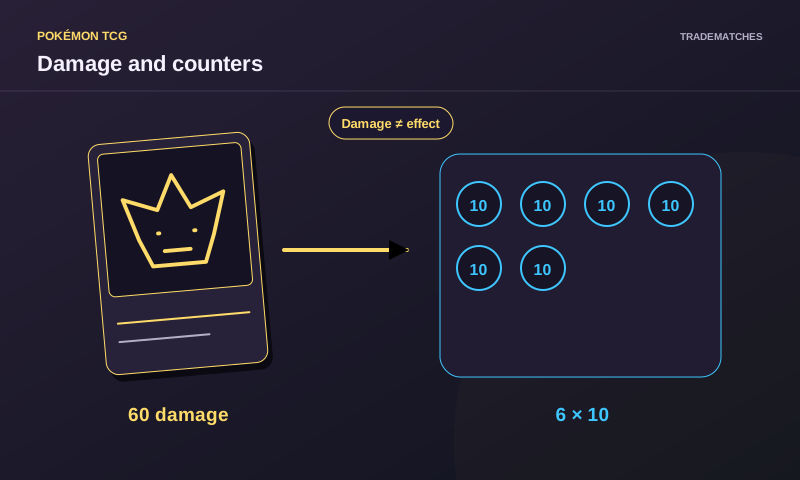
Pokémon damage versus counters: different protections
Learn how Pokémon damage differs from placing counters, with protection examples, Weakness checks and clear marker arithmetic for Knock Out decisions.
Pokémon Delta Reign: dates and Legendary Stadiums
Review official Pokémon Delta Reign dates and the new Legendary Stadium structure. Identify the Pyroduct pair and what to confirm before a local purchase.
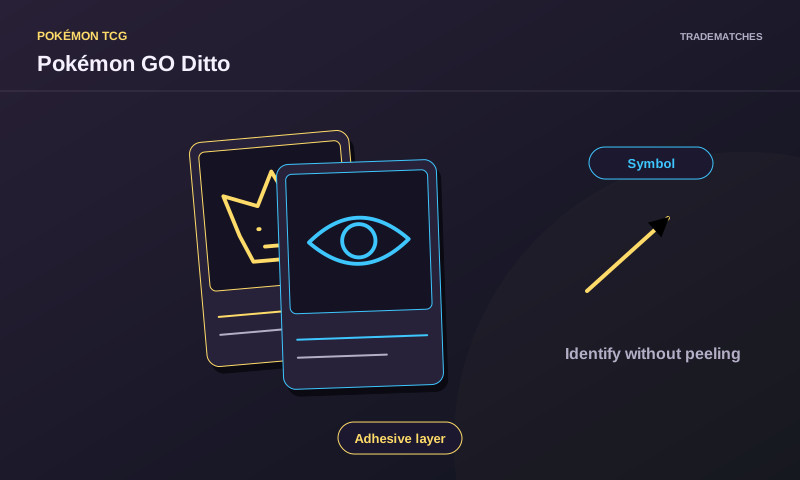
Pokémon GO peelable Ditto: identify before peeling
Identify a peelable Pokémon GO Ditto before removing its layer. Check the symbol, sticker and condition so a purchase or trade describes the actual card.
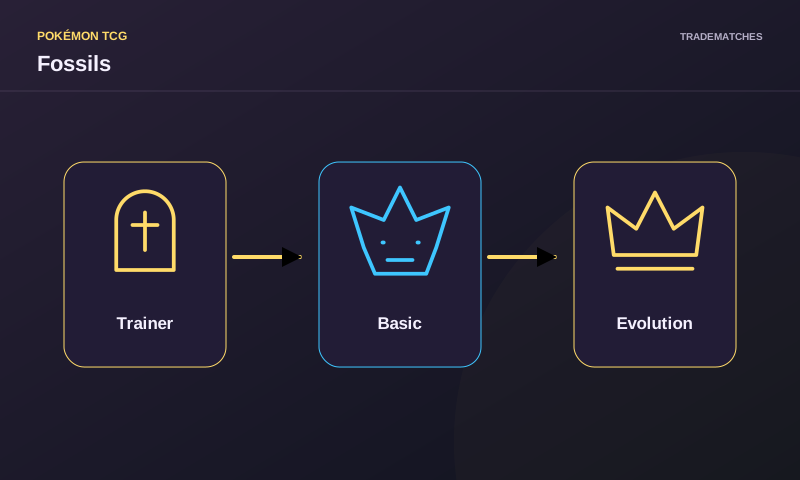
Pokémon Fossils: Trainers played as Basic Pokémon
Learn when a Fossil is a Trainer or a Basic Pokémon, how that affects game setup and which evolution instructions to check before playing each card.
Pokémon GX attacks: one shared use per game
Understand the one GX attack per player per game, its costs and TAG TEAM extra Energy conditions without confusing ordinary attacks or separate markers.
Pokémon Poisoned and Burned: counters and coin flips
Apply Poisoned and Burned during Pokémon Checkup: counters, coin flips, combined conditions and ways to remove them without confusing attack damage.
Pokémon Ancient Traits: why they are not Abilities
Distinguish Pokémon Ancient Traits from attacks and Abilities, interpret their banner and avoid applying Ability suppression to a different text category.
Pokémon BREAK: what carries over from the evolution?
Read Pokémon BREAK rules: which attacks and attributes carry over, what changes on evolution and how to identify the horizontal card when buying or trading.
Magic: The Gathering
Formats, mechanics and cards for your next trade.
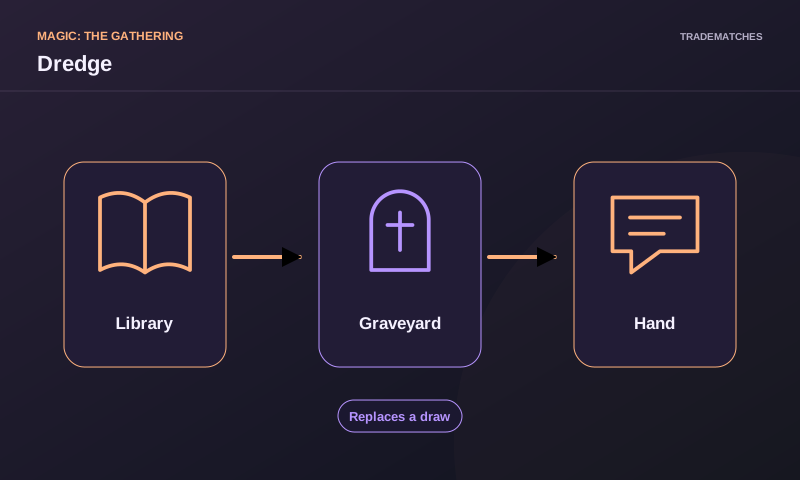
Magic dredge: replacing draws and counting cards
Learn to replace a draw with dredge in Magic. Count library and graveyard cards, handle multiple draws and distinguish returning a card from drawing it.
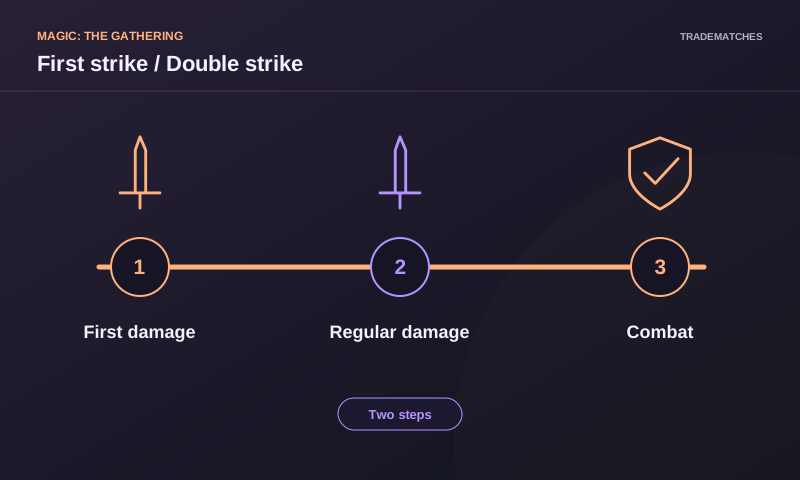
Magic first strike and double strike: combat steps
Resolve Magic first strike and double strike with combat timelines, dead blockers and responses between steps, plus worked power and trample examples.
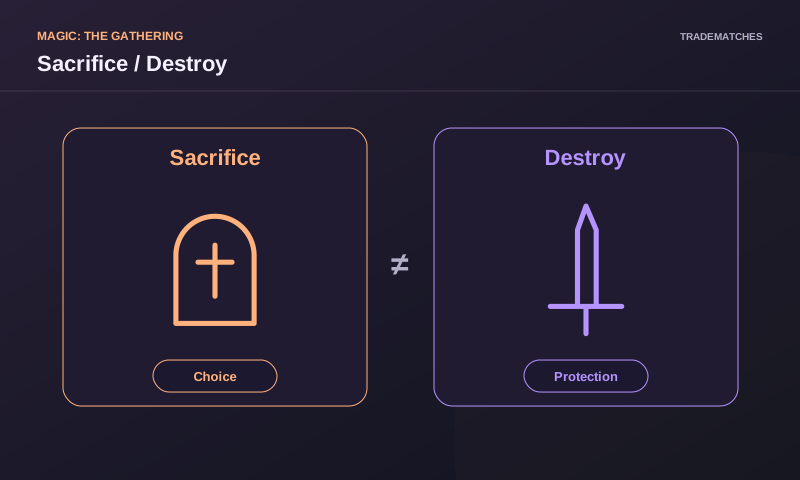
Magic sacrifice versus destroy: what prevents each
Distinguish sacrifice from destroy in Magic. Check indestructible, costs, targeting and dies triggers to identify who chooses and which protections work.
Magic dungeons and initiative: how to advance
Distinguish venturing into a dungeon from the Undercity, track your own route and understand how initiative is gained and transferred during a game.
Magic mutate: the top card and retained abilities
Learn Magic mutate: non-Human targets, the top card, abilities retained by the merged creature and what happens when the combined pile leaves the field.
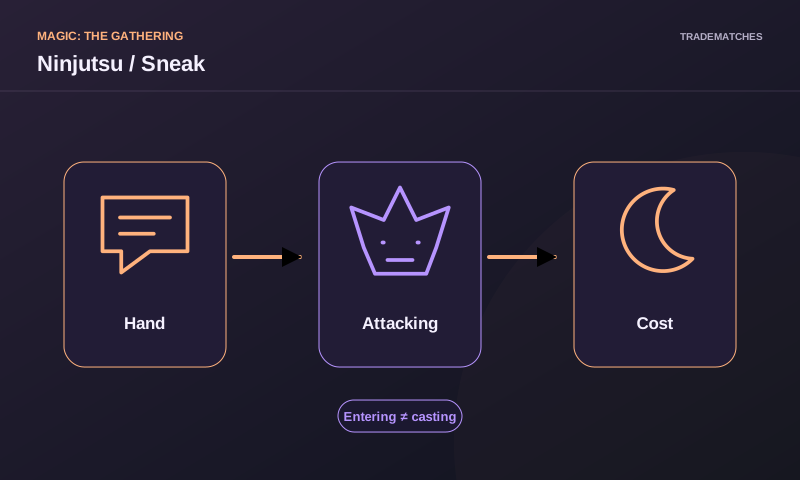
Magic ninjutsu versus sneak: entering versus casting
Compare ninjutsu and sneak in Magic: what you return as a cost, when you can use them and why entering attacking differs from casting a creature spell.
Magic layers: calculating power and toughness
Calculate Magic power and toughness through layer seven: base values, modifications, counters and switches, with examples separating damage from toughness.
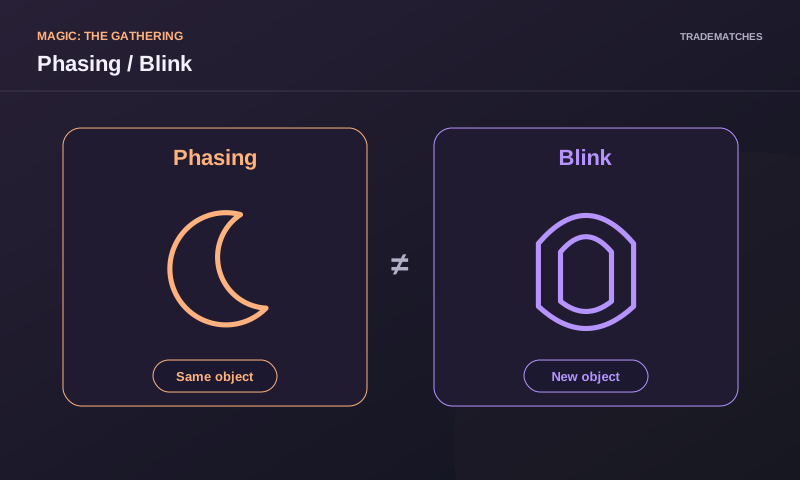
Magic phasing versus blink: what actually changes?
Compare phasing and blink in Magic: permanent identity, attachments, tokens and triggers to understand what each procedure preserves and when the card returns.
Yu-Gi-Oh!
Summons, effects and gameplay questions, step by step.
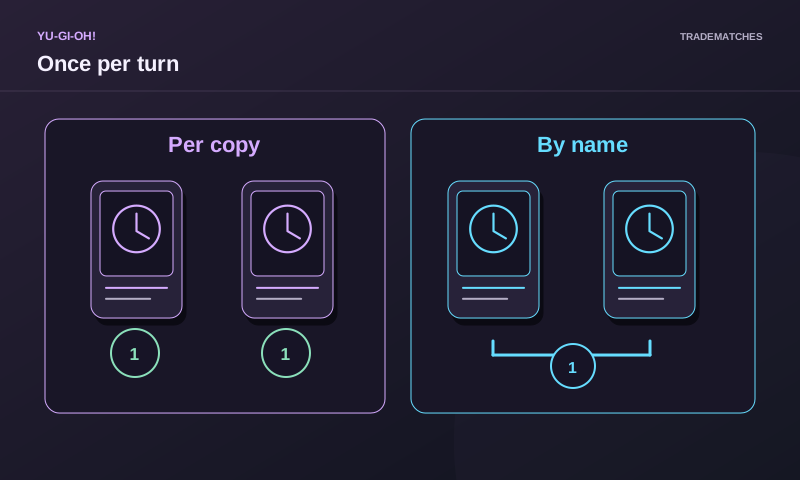
Yu-Gi-Oh! once per turn: per copy or per name
Check whether Yu-Gi-Oh! once per turn limits one copy or a name. Track multiple copies, returns to the field and the difference between use and activate.
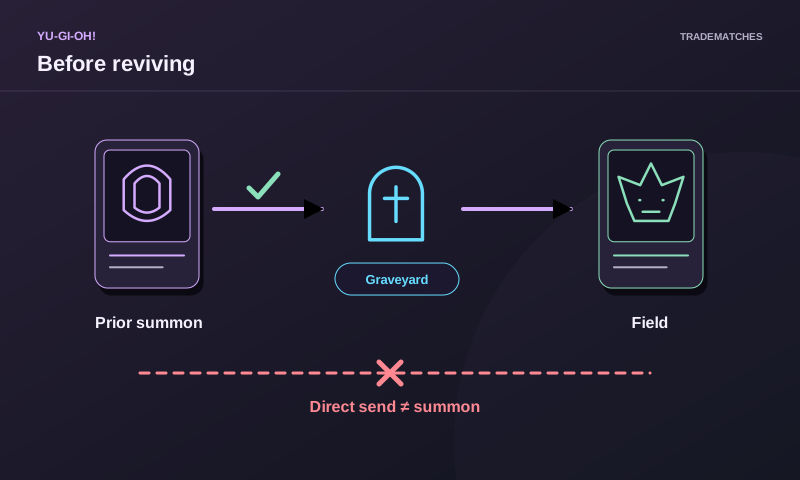
Yu-Gi-Oh! reviving a properly summoned monster
Before reviving a Yu-Gi-Oh! monster, verify its proper summon. Distinguish direct sends to the Graveyard, negated summons and printed revival restrictions.
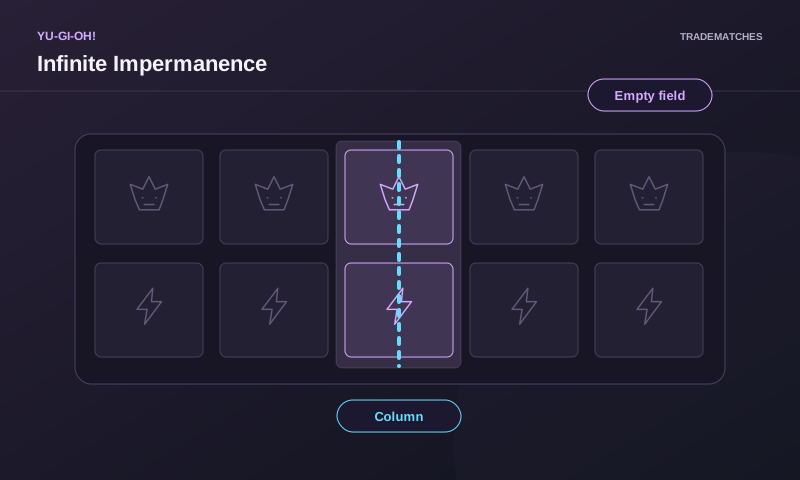
Infinite Impermanence: hand, column and resolution
Learn when Infinite Impermanence can activate from hand, what its column negation requires and how to check targets and Chain resolution correctly.
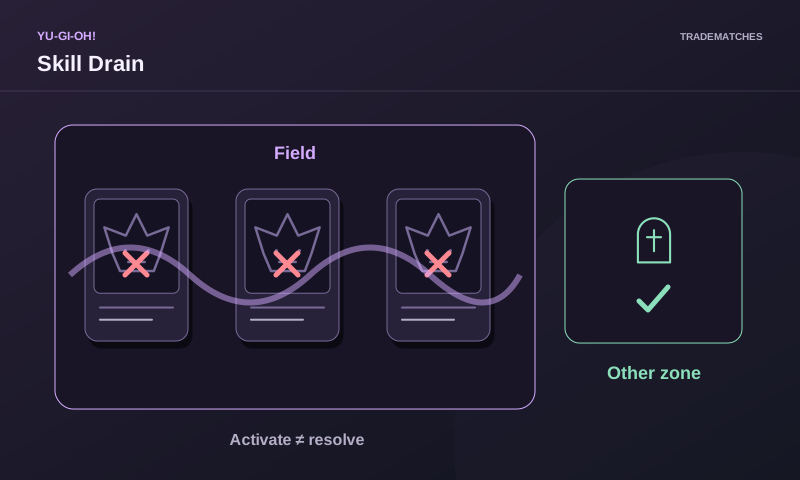
Yu-Gi-Oh! Skill Drain: activating negated effects
Understand Skill Drain: monsters can activate effects and pay costs, but their position at resolution determines whether continuous negation applies.
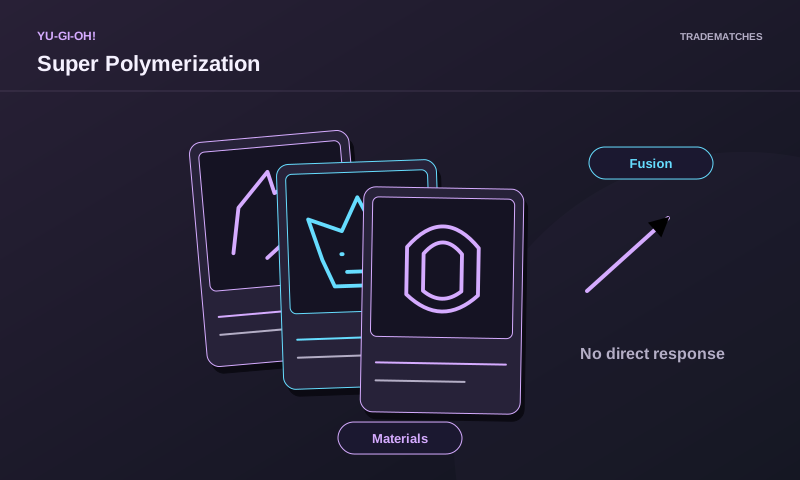
Super Polymerization: materials and response limits
Check Super Polymerization materials, discard cost and legal timing. Distinguish the response prohibition from ignoring immunity or summoning restrictions.
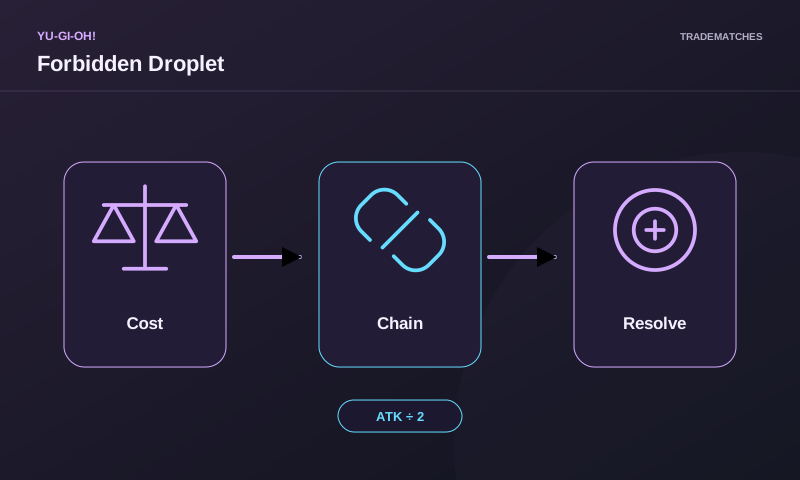
Yu-Gi-Oh! Forbidden Droplet: costs and responses
Understand Forbidden Droplet: cards sent as cost, types restricting responses and monsters chosen at resolution. Check the required count and protections.
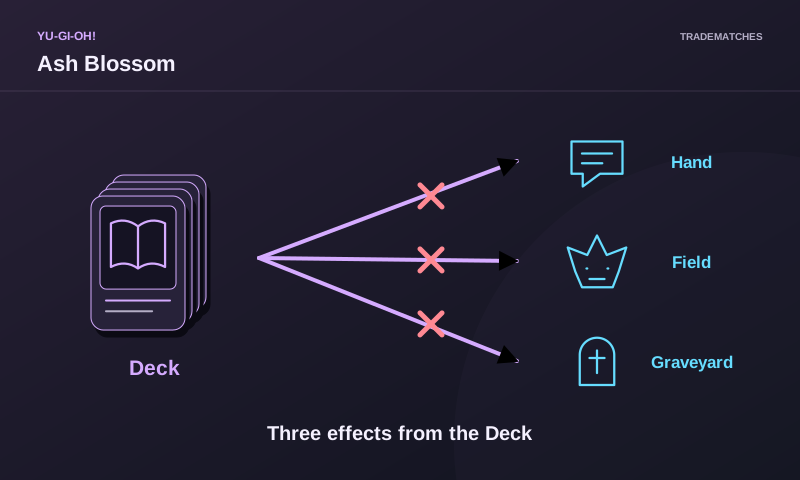
Yu-Gi-Oh! Ash Blossom: which effects can it negate?
Recognise the three effect categories Ash Blossom responds to, separate costs from resolution and check the legal activation timing in a Yu-Gi-Oh duel.
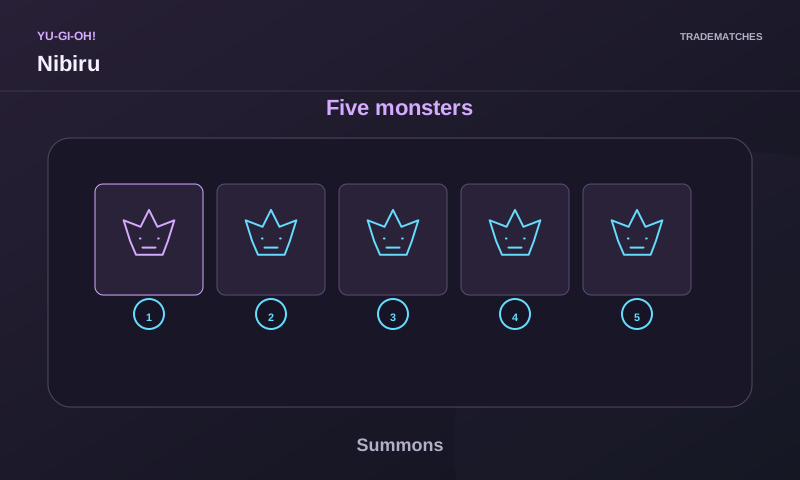
Yu-Gi-Oh! Nibiru: counting five summoned monsters
Count Nibiru’s five monsters correctly, distinguish simultaneous Summons and calculate the Token using original values of the monsters actually Tributed.
One Piece Card Game
Start your collection and understand the game rules.
One Piece GC-2026 Heroines: gift box contents
Check confirmed One Piece GC-2026 Heroines contents: ten promos, two EB-05 packs and 70 sleeves. Distinguish the gift box, starter decks and local offers.
One Piece EB-05: Heroines Edition vol.2 buying guide
Review the One Piece EB-05 Heroines Edition vol.2 announcement: English release, card types and regional differences before reserving packs or boxes.
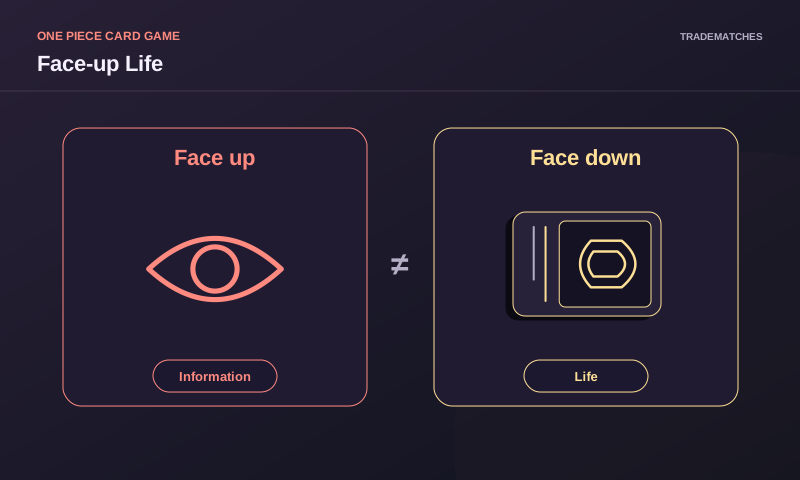
One Piece face-up Life: what changes and what does not
Understand face-up Life in One Piece: visible information, card order, Trigger and effects adding cards without turning them into Characters in play.
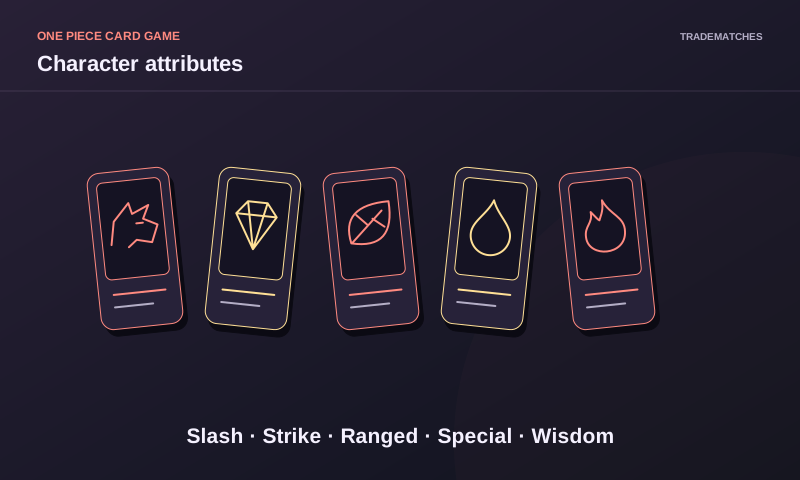
One Piece attributes: Slash, Strike and card types
Identify One Piece attributes, types, colours and names. Check effect filters without inventing combat advantages between Slash, Strike and other attributes.
One Piece simultaneous effects: choosing the order
Order simultaneous One Piece effects, distinguish turn player and opponent and check what happens when new effects appear or their conditions change.
One Piece On Play and When Attacking: trigger timing
Learn when On Play and When Attacking happen in One Piece, how their effects resolve and which conditions still matter after a Character enters play.
Special One Piece DON!! cards: a collecting guide
Identify special One Piece DON!! cards by artwork, product, language and finish. Check mixed lots and define your collection before choosing what to buy.
One Piece mulligan and the five-card opening hand
Learn One Piece's five-card mulligan, the order of returning and shuffling cards, and how to assess an opening hand before placing your Life cards.
Disney Lorcana
Rarities, characters and mechanics from the world of Lorcana.
Lorcana Storyborn, Dreamborn and Floodborn explained
Identify Storyborn, Dreamborn and Floodborn in Lorcana. Separate classification, rarity and Shift, and organise variants without confusing expansion names.
Lorcana Collector Boosters: Illustrious in 2027
Review Lorcana Collector Boosters and serialized Illustrious announced for 2027: confirmed contents and information still pending before buying packs.
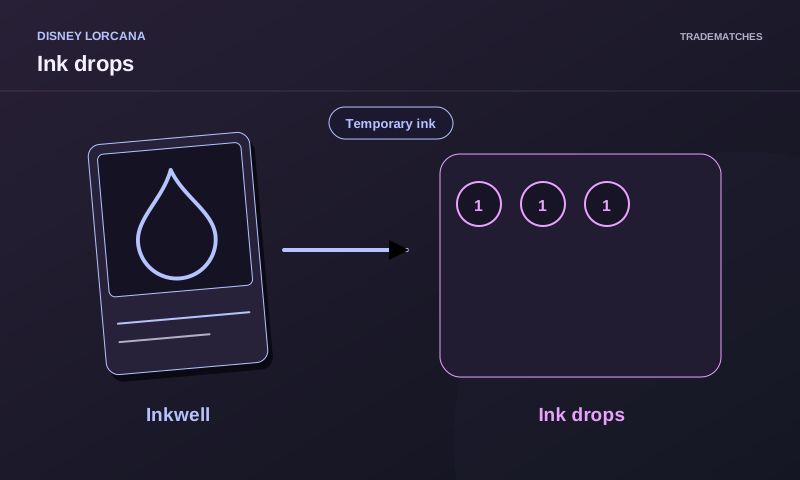
Lorcana ink drops: temporary ink from Hyperia City
Learn how announced Hyperia City ink drops work: consumable ink, effects generating it and differences from permanent inkwell cards before release.
Deep Trouble or Palace Heist: choosing a Lorcana Quest
Compare Lorcana Deep Trouble and Palace Heist by scenario, decks and components. Inspect a used box and choose between Ursula and Jafar using official details.
Lorcana Pack Rush: two boosters and 15 lore
Play Lorcana Pack Rush with two boosters, a five-card hand and two starting ink. Check the 15-lore goal, mixed inks and what to do when the deck is empty.
Lorcana D23 2026: six-card collection and separate promos
Distinguish the six-card Lorcana D23 2026 Collection, its Show Bundle and separate promotional cards. Check contents and provenance before buying a lot.
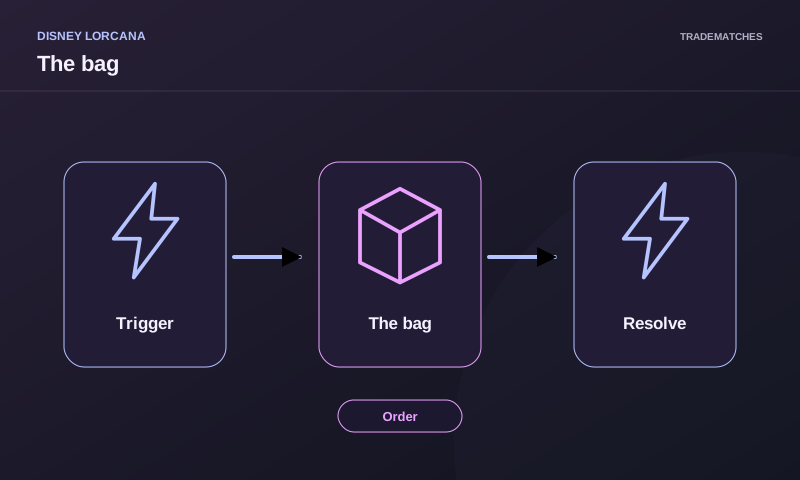
The Lorcana bag: ordering triggered abilities
Understand the Lorcana bag: which abilities enter it, who resolves first and how new triggers are ordered without interrupting the current resolving effect.
Epic, Iconic and Enchanted in Disney Lorcana
Distinguish Lorcana Epic, Iconic and Enchanted printings by their treatments and identifiers. Check Fabled variants and photographs before buying.
Riftbound
Cards, abilities and your first steps in Riftbound.
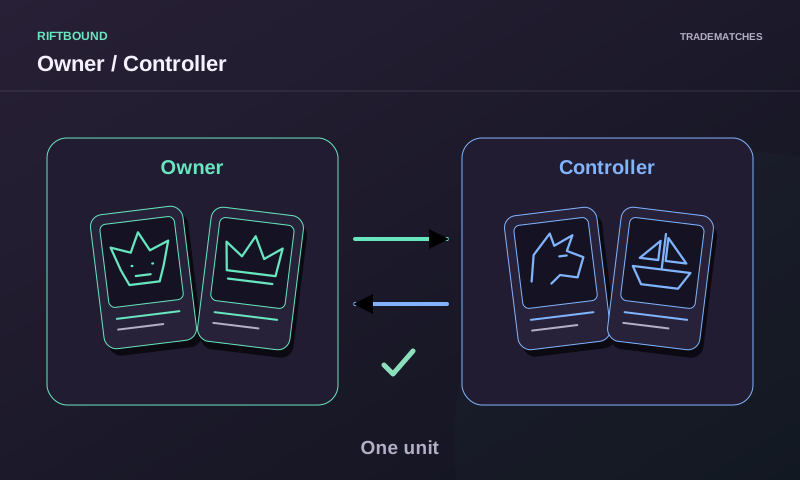
Riftbound unit owner versus controller
Distinguish owner from controller in Riftbound. Trace another player’s unit to Trash, hand or deck, and separate card control from Battlefield control.
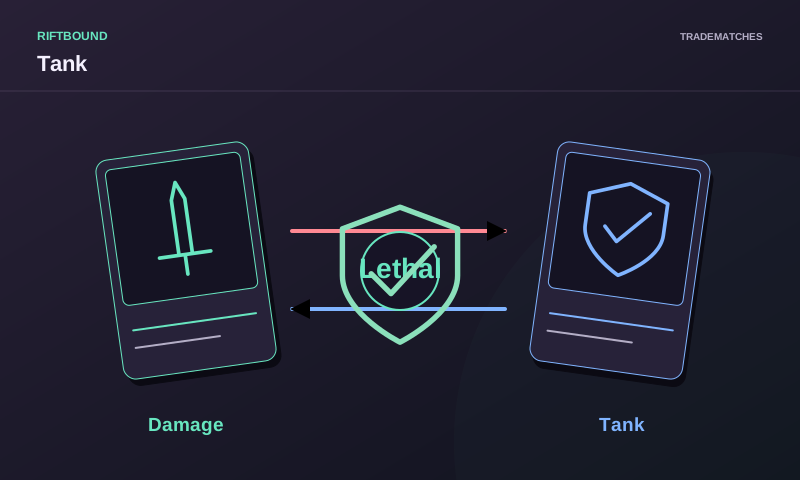
Riftbound Tank: assigning lethal damage first
Assign Riftbound combat damage with Tank: meet lethal thresholds on every Tank unit before distributing damage to units without the keyword in combat.
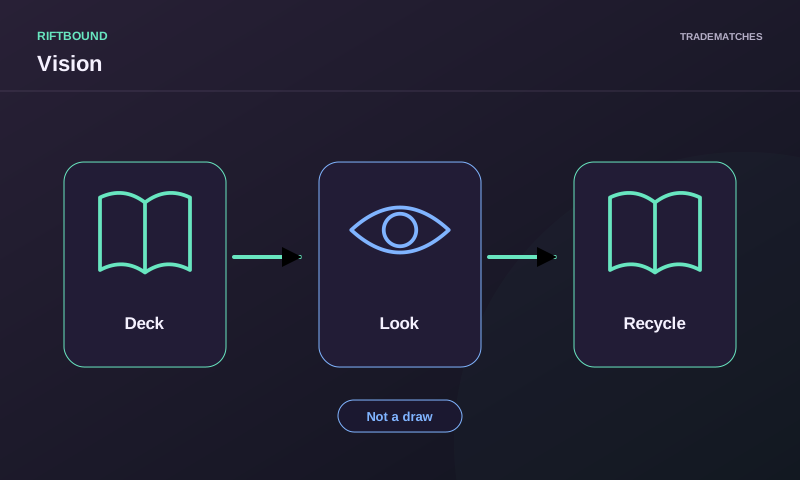
Riftbound Vision: looking and recycling without drawing
Resolve Riftbound Vision: look at the top of your deck, decide whether to recycle and handle multiple triggers without confusing Predict with drawing.
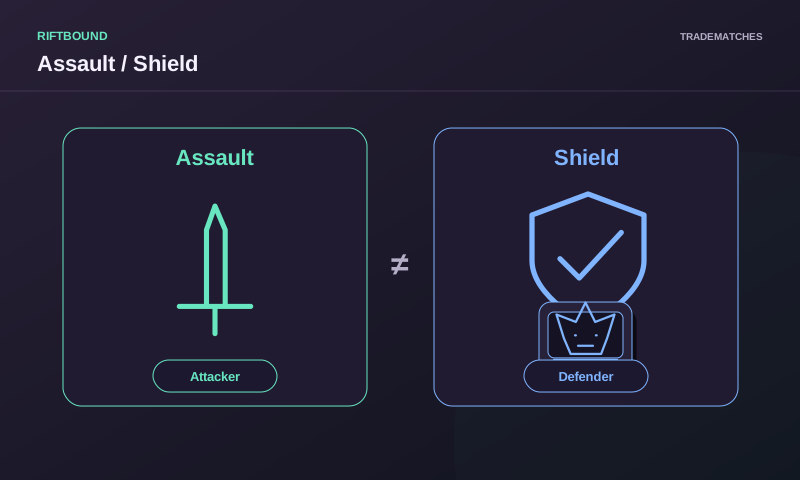
Riftbound Assault and Shield: when might increases
Calculate Riftbound Assault and Shield by attacker or defender status. Check omitted values, multiple grants, Stun and effects that double current might.
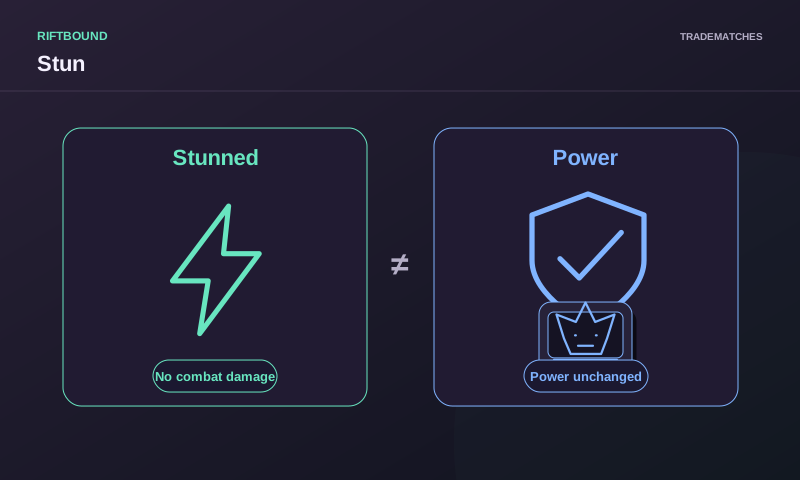
Riftbound Stun: might does not become zero
Resolve Riftbound Stun without setting might to zero. Separate combat contribution, lethal threshold, readiness and status duration through unit examples.
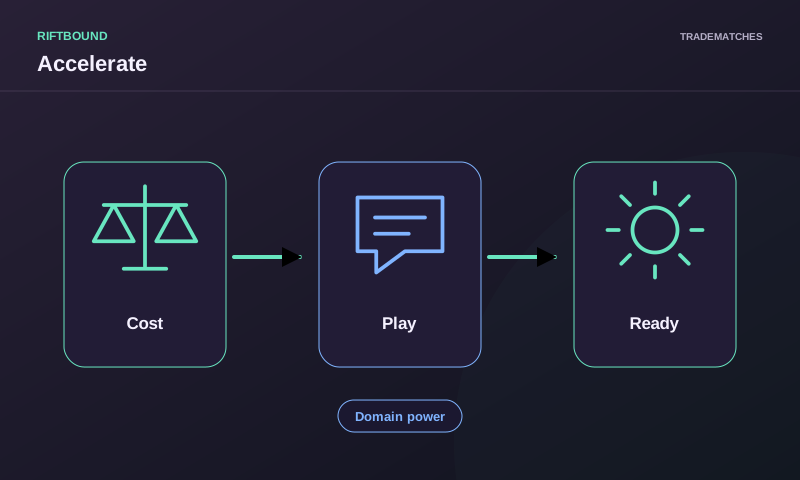
Riftbound Accelerate: cost and entering ready
Calculate Accelerate’s cost in Riftbound, check domain Power requirements and distinguish entering ready from readying a unit that is already on the board.
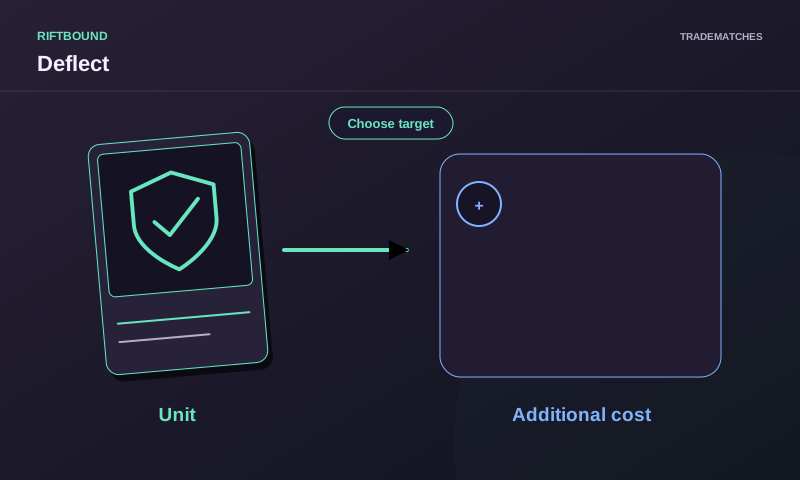
Riftbound Deflect: paying to choose a unit
Learn how to pay Riftbound Deflect for each choice of an opposing unit, identify specific exceptions and separate this protection from ordinary combat damage.
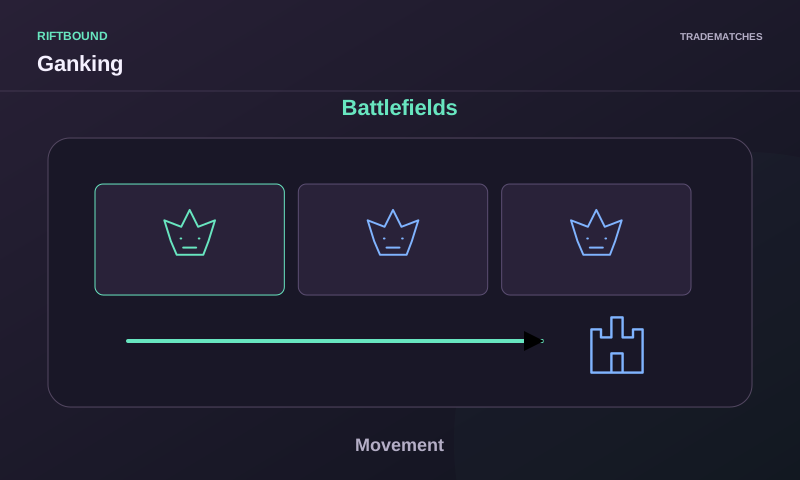
Riftbound Ganking and moving between battlefields
Learn how Riftbound Ganking permits battlefield-to-battlefield movement, which normal requirements remain and why it does not grant extra moves.
Other TCG games
Explore Digimon, Flesh and Blood, Star Wars and more.
Altered physical cards, QR codes and digital ownership
Clarify what an Altered trade includes: the physical card, digital ownership or both. Check QR registration and print-on-demand copies before confirming.
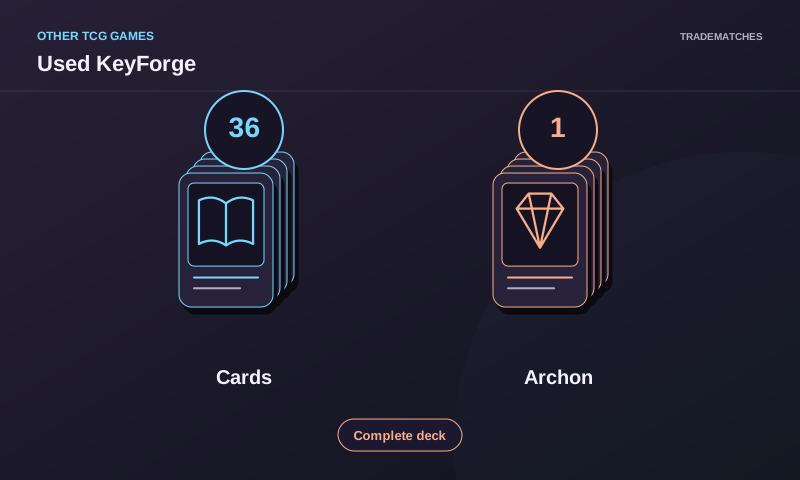
Buying a used KeyForge deck: checking all 36 cards
Check a used KeyForge deck: its 36-card list, identity, condition and registration. Distinguish physical completeness, account transfer and special formats.
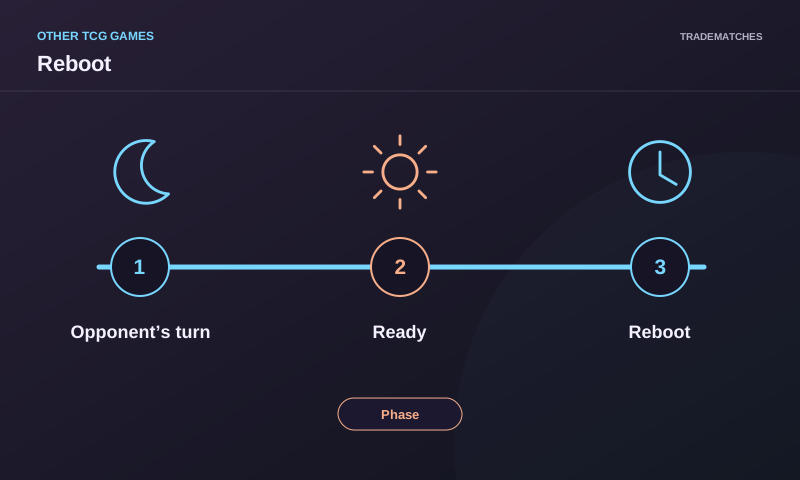
Digimon Reboot: unsuspending on the opponent turn
Learn when Reboot unsuspends a Digimon during the opponent’s turn. Check phase timing, restrictions and its link to Blocker without assuming protection.
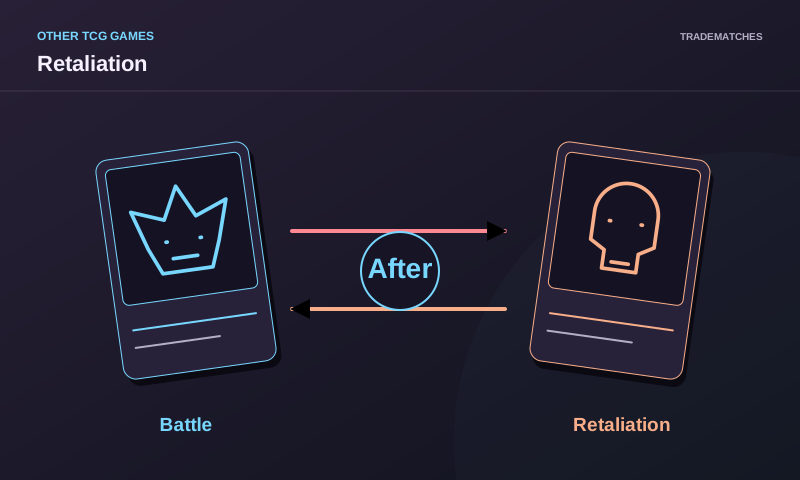
Digimon Retaliation: deleting after losing battle
Resolve Digimon Retaliation when your Digimon is deleted in battle. Distinguish security, DP reduction and effect deletion with clear timing examples.
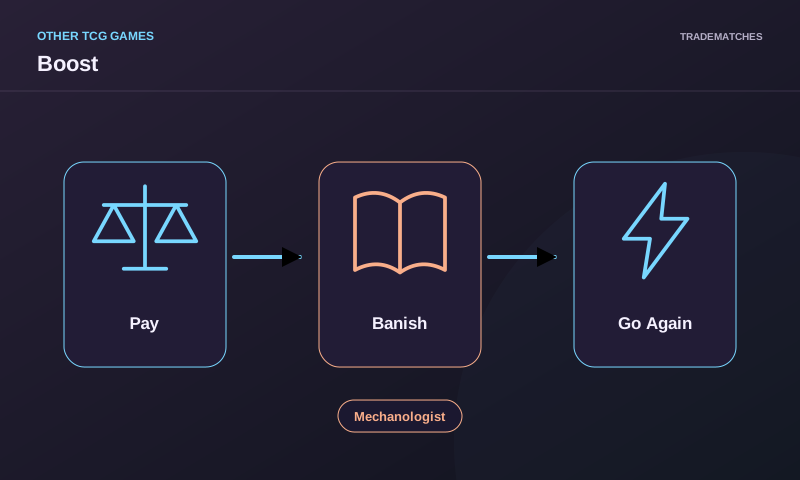
Flesh and Blood Boost: paying without getting go again
Distinguish paying Boost from gaining go again in Flesh and Blood. Check Mechanologist class, empty decks and generic cards with additional-cost examples.
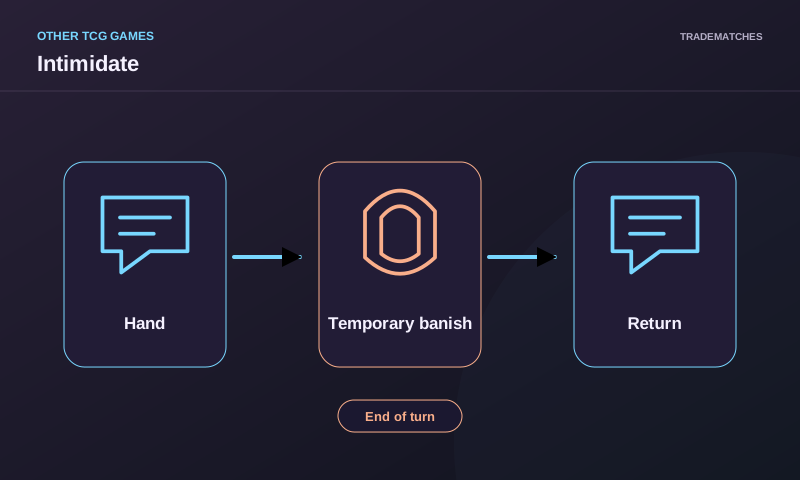
Flesh and Blood Intimidate: temporary hand banishment
Resolve Flesh and Blood Intimidate: random selection, temporary banishment and return in the end phase. Keep a clear record of the specific affected cards.
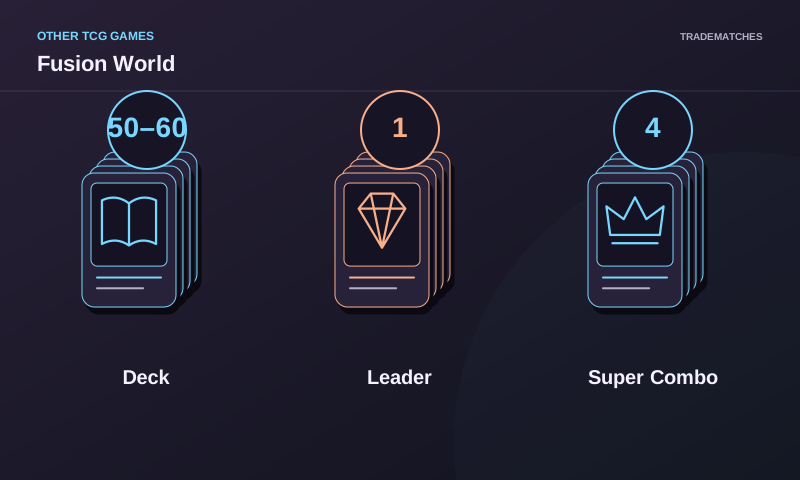
Fusion World deck checks: 50–60 cards and Super Combo
Check a Fusion World deck: 50–60 cards, Leader colours, card numbers and the combined Super Combo limit. Use a clear construction ledger before playing.
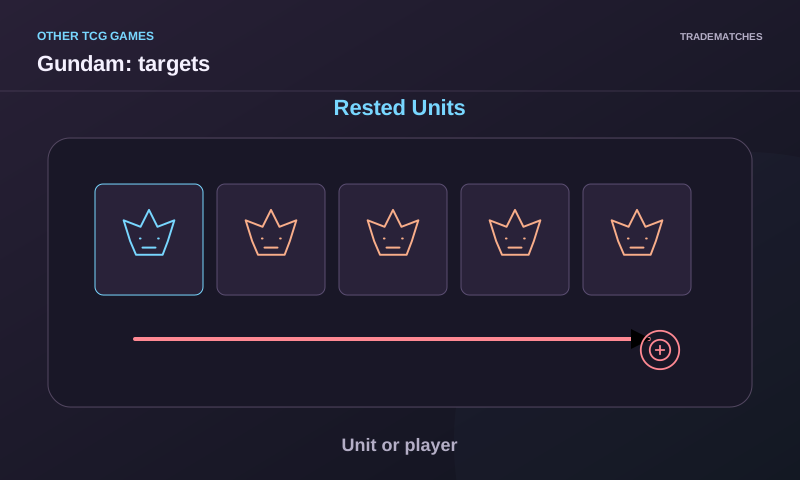
Gundam legal attack targets: rested Units and players
Check legal attack targets in Gundam Card Game. Distinguish rested Units and players, later Blocker changes and targets that leave before battle resolves.
Buying, prices and authenticity
Identification, value references and informed purchases.
Cardmarket DAC7: 30 sales and €2,000 in Spain
Understand Cardmarket DAC7 for Spain: fewer than 30 activities and up to €2,000, reporting and records. These thresholds are not exemptions from existing tax.
Should you clean TCG cards before grading?
Decide what to do about dirt before grading a TCG card. Distinguish sleeve marks, damage and treatments that can alter the original surface or coating.
Missing cards in a Cardmarket order: resolving it
Document missing cards in a Cardmarket order, contact the seller and agree an additional shipment or refund with clear evidence and follow-up checks.
TCG insurance inventory: evidence and declared value
Prepare a TCG inventory for an insurance enquiry: identity, photos, acquisitions and dated valuations, with coverage and terms confirmed by the insurer.
Cardmarket balance: withdrawable and restricted credit
Understand why Cardmarket balance can exceed the withdrawable amount. Review restricted credit, pending orders, transaction history and bank details first.
CGC Error cards: what the label actually certifies
Read a CGC Error label by separating identity, attribution and grade. Verify the certificate and assess extra defects, comparisons and scarcity claims.
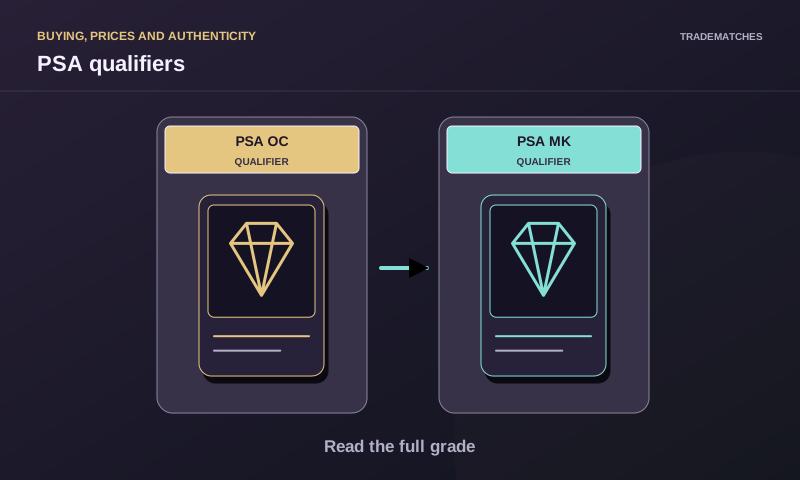
PSA OC, MK and other qualifiers: reading the full grade
Interpret PSA OC, MK, MC and other qualifiers alongside the grade. Distinguish marks, centring and cuts, verify certification and compare the full result.
Cardmarket evaluations: reviewing a received order
Write Cardmarket evaluations based on the actual order, understand seller ratings and appeals, and check problems before confirming receipt of a delivery.
Using TradeMatches
Prepare your lists and find useful matches.
How the TradeMatches local radar works
Learn how to use the TradeMatches local radar to discover compatible collectors and plan nearby card trades.
How to build a TradeMatches profile collectors can trust
Improve your TradeMatches profile with clear information, well-kept lists and habits that build trust for card trades.
How to keep your TradeMatches collection updated
Create a simple routine for updating your available and wanted cards in TradeMatches after purchases, openings and trades.
How to start using TradeMatches to find card trades near you
Learn how to prepare your lists, use the local radar and take the first step toward relevant TCG trades on TradeMatches.
How to use TradeMatches before attending a TCG meetup
Prepare your lists and proposals in TradeMatches before a TCG meetup to make better use of your time and trades.
Collecting and trading
Organization, storage and agreements between collectors.
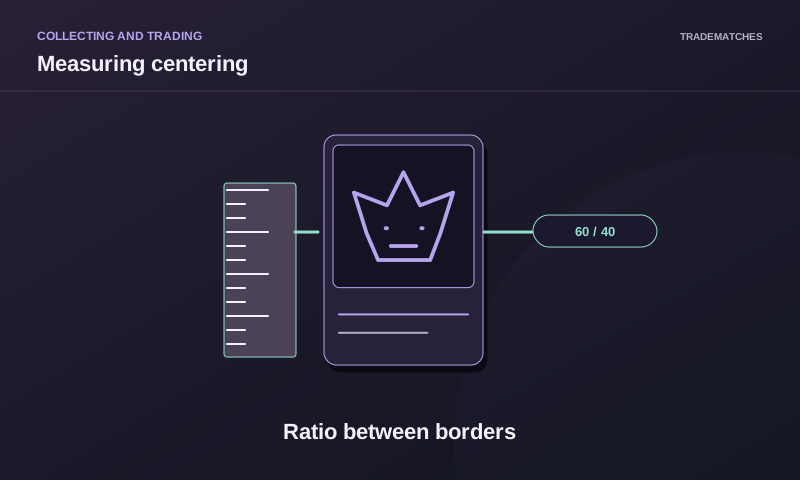
Card centering: measuring 60/40 without predicting grades
Measure card centering and calculate opposing-border ratios. Use the calculator, 60/40 examples and photo limitations without treating a ratio as a grade.
TCG opening-hand probability: at least one copy
Calculate the chance of at least one target in a TCG opening hand. Use the calculator, without-replacement examples and clear limits for combos and mulligans.
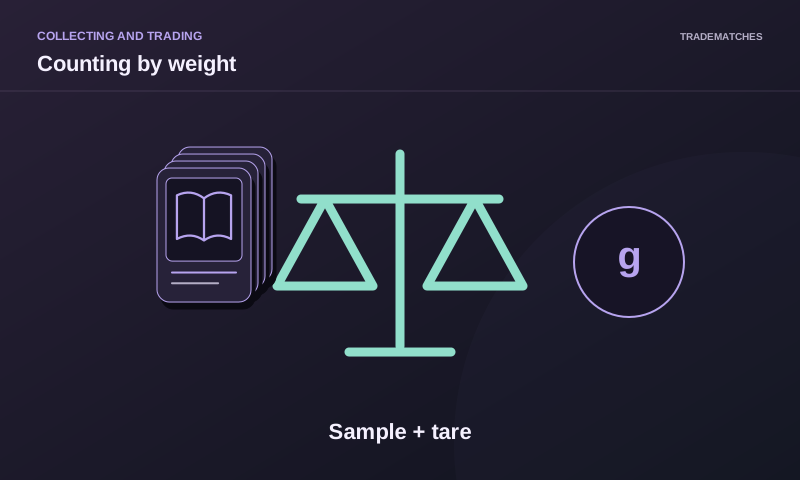
Counting cards by weight: estimating a bulk lot honestly
Estimate a bulk card lot by weight with a counted sample, tare and consistent units; record uncertainty and manually verify exact quantities promised in sales.
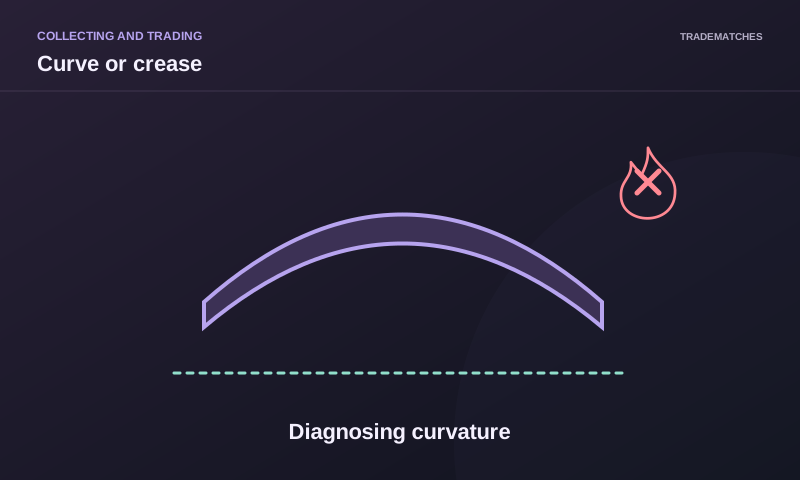
Curled foil cards: assessing them without heat or water
Assess a curled foil card: distinguish curl from crease, document its condition and review storage without using heat, water or pressure as a universal fix.
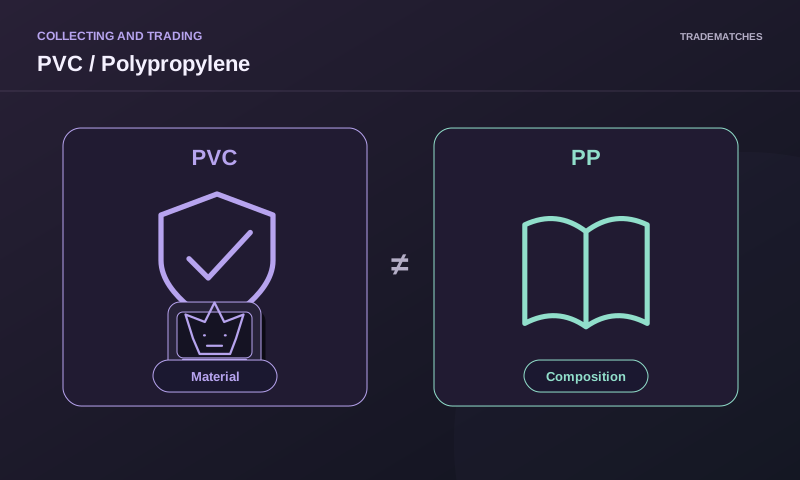
PVC or polypropylene card sleeves: reading the material
Compare flexible PVC and polypropylene card sleeves: materials, plasticizers, fit and what PVC-free or acid-free labels actually establish for storage.
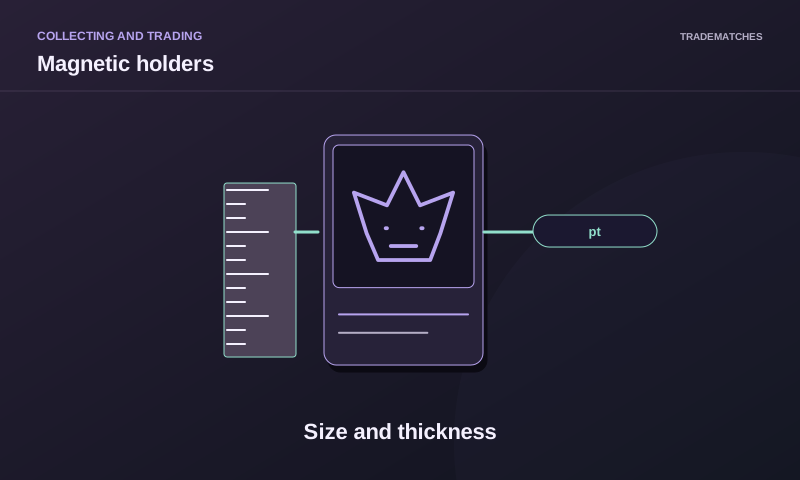
Magnetic TCG holders: choosing size and pt thickness
Choose magnetic holders by size, pt thickness and sleeve compatibility. Check the cavity and closure before storing a card, displaying it or shipping it.
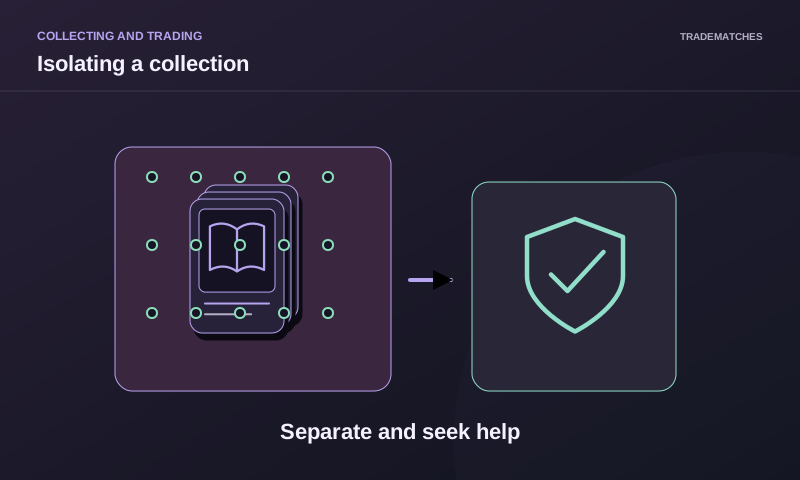
Mould on TCG cards: isolating the collection safely
Manage suspected mould on TCG cards: separate materials, document moisture and seek assessment. Avoid home cleaning and mixing them into the collection.
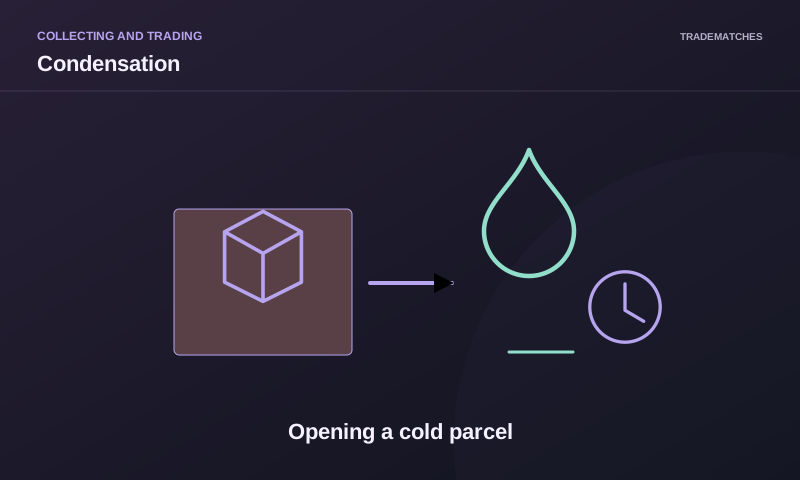
Cold TCG cards and condensation: opening a delivery
Receive a cold TCG delivery without introducing condensation: distinguish dry barriers from wet packaging, document damage and avoid improvised treatments.
Find your next guide
Altered physical cards, QR codes and digital ownership
Clarify what an Altered trade includes: the physical card, digital ownership or both. Check QR registration and print-on-demand copies before confirming.
Buying a used KeyForge deck: checking all 36 cards
Check a used KeyForge deck: its 36-card list, identity, condition and registration. Distinguish physical completeness, account transfer and special formats.
Card centering: measuring 60/40 without predicting grades
Measure card centering and calculate opposing-border ratios. Use the calculator, 60/40 examples and photo limitations without treating a ratio as a grade.
Cardmarket DAC7: 30 sales and €2,000 in Spain
Understand Cardmarket DAC7 for Spain: fewer than 30 activities and up to €2,000, reporting and records. These thresholds are not exemptions from existing tax.
Digimon Reboot: unsuspending on the opponent turn
Learn when Reboot unsuspends a Digimon during the opponent’s turn. Check phase timing, restrictions and its link to Blocker without assuming protection.
Digimon Retaliation: deleting after losing battle
Resolve Digimon Retaliation when your Digimon is deleted in battle. Distinguish security, DP reduction and effect deletion with clear timing examples.
Flesh and Blood Boost: paying without getting go again
Distinguish paying Boost from gaining go again in Flesh and Blood. Check Mechanologist class, empty decks and generic cards with additional-cost examples.
Flesh and Blood Intimidate: temporary hand banishment
Resolve Flesh and Blood Intimidate: random selection, temporary banishment and return in the end phase. Keep a clear record of the specific affected cards.
Fusion World deck checks: 50–60 cards and Super Combo
Check a Fusion World deck: 50–60 cards, Leader colours, card numbers and the combined Super Combo limit. Use a clear construction ledger before playing.
Gundam legal attack targets: rested Units and players
Check legal attack targets in Gundam Card Game. Distinguish rested Units and players, later Blocker changes and targets that leave before battle resolves.
Lorcana Storyborn, Dreamborn and Floodborn explained
Identify Storyborn, Dreamborn and Floodborn in Lorcana. Separate classification, rarity and Shift, and organise variants without confusing expansion names.
Magic dredge: replacing draws and counting cards
Learn to replace a draw with dredge in Magic. Count library and graveyard cards, handle multiple draws and distinguish returning a card from drawing it.
Magic first strike and double strike: combat steps
Resolve Magic first strike and double strike with combat timelines, dead blockers and responses between steps, plus worked power and trample examples.
Magic sacrifice versus destroy: what prevents each
Distinguish sacrifice from destroy in Magic. Check indestructible, costs, targeting and dies triggers to identify who chooses and which protections work.
One Piece GC-2026 Heroines: gift box contents
Check confirmed One Piece GC-2026 Heroines contents: ten promos, two EB-05 packs and 70 sleeves. Distinguish the gift box, starter decks and local offers.
Pokémon damage versus counters: different protections
Learn how Pokémon damage differs from placing counters, with protection examples, Weakness checks and clear marker arithmetic for Knock Out decisions.
Pokémon Delta Reign: dates and Legendary Stadiums
Review official Pokémon Delta Reign dates and the new Legendary Stadium structure. Identify the Pyroduct pair and what to confirm before a local purchase.
Pokémon GO peelable Ditto: identify before peeling
Identify a peelable Pokémon GO Ditto before removing its layer. Check the symbol, sticker and condition so a purchase or trade describes the actual card.
Riftbound unit owner versus controller
Distinguish owner from controller in Riftbound. Trace another player’s unit to Trash, hand or deck, and separate card control from Battlefield control.
Should you clean TCG cards before grading?
Decide what to do about dirt before grading a TCG card. Distinguish sleeve marks, damage and treatments that can alter the original surface or coating.
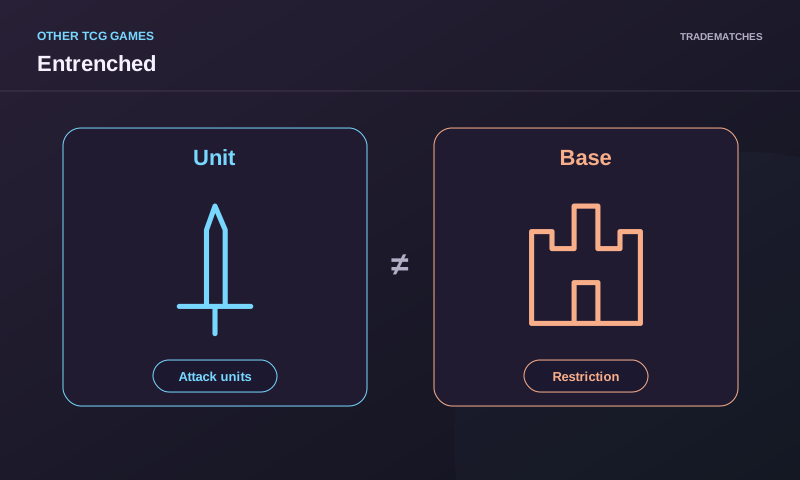
SWU Entrenched: stronger units that cannot attack bases
Check how Entrenched strengthens a Star Wars Unlimited unit while stopping base attacks. Review enemy attachments and damage when the upgrade leaves play.
TCG opening-hand probability: at least one copy
Calculate the chance of at least one target in a TCG opening hand. Use the calculator, without-replacement examples and clear limits for combos and mulligans.
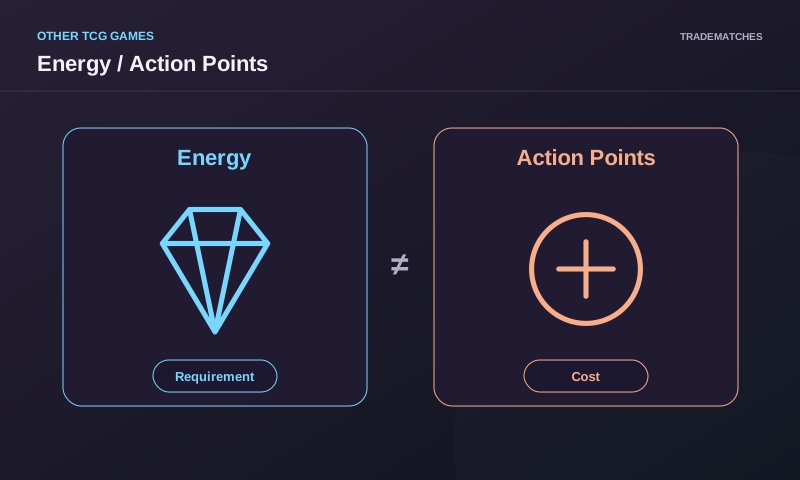
Union Arena required energy versus Action Points
Separate required energy from Action Points in Union Arena. Check colours, AP costs and Energy Line changes before planning the order of your turn’s plays.
Yu-Gi-Oh! once per turn: per copy or per name
Check whether Yu-Gi-Oh! once per turn limits one copy or a name. Track multiple copies, returns to the field and the difference between use and activate.
Yu-Gi-Oh! reviving a properly summoned monster
Before reviving a Yu-Gi-Oh! monster, verify its proper summon. Distinguish direct sends to the Graveyard, negated summons and printed revival restrictions.
Counting cards by weight: estimating a bulk lot honestly
Estimate a bulk card lot by weight with a counted sample, tare and consistent units; record uncertainty and manually verify exact quantities promised in sales.
Curled foil cards: assessing them without heat or water
Assess a curled foil card: distinguish curl from crease, document its condition and review storage without using heat, water or pressure as a universal fix.
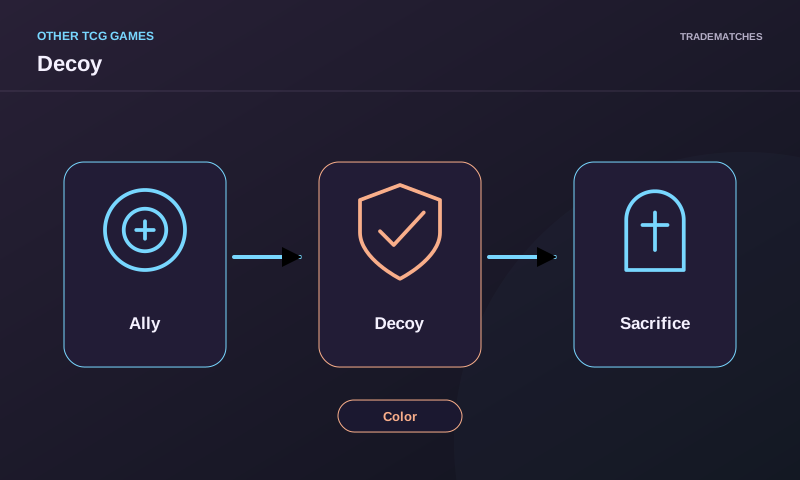
Digimon Decoy: sacrificing an ally to protect another
Check when Decoy protects another Digimon: specified colour, deletion by an opponent effect and sacrificing the ally versus battle or DP reduction.
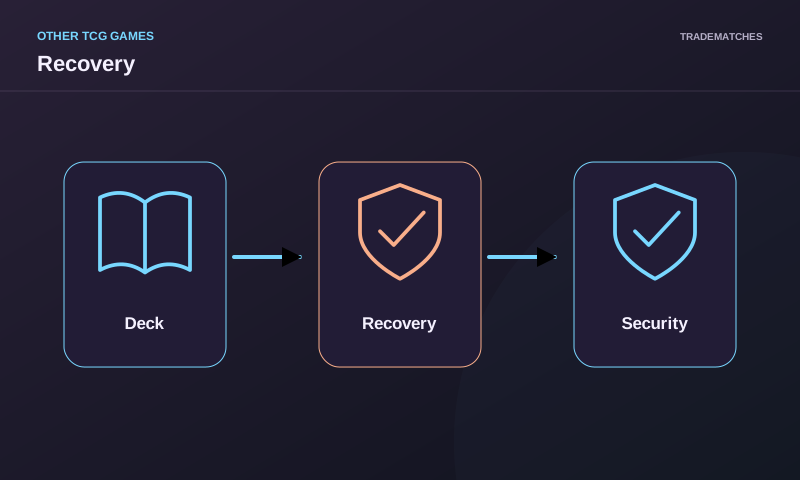
Digimon Recovery: adding cards to security
Learn to resolve Digimon Recovery: source, amount and position of cards added to security without drawing them or activating their Security effects.
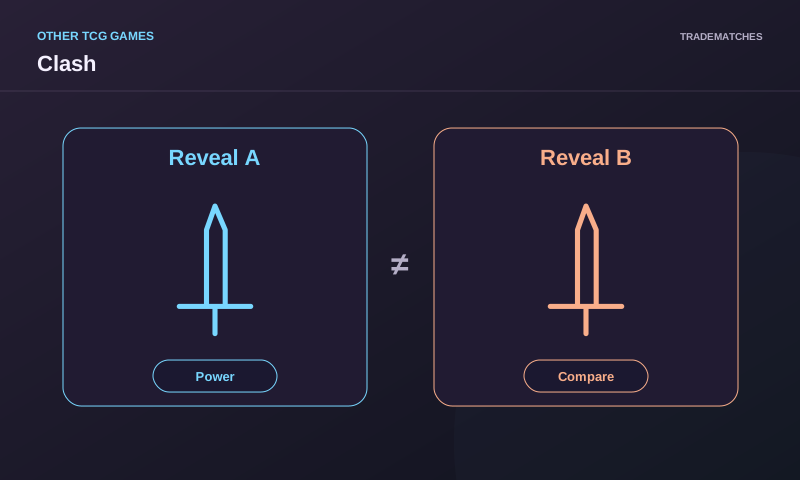
Flesh and Blood Clash: reveal, compare and handle ties
Resolve Flesh and Blood Clash: reveal top cards, compare power and handle ties or cards without power without confusing the comparison with pitch values.
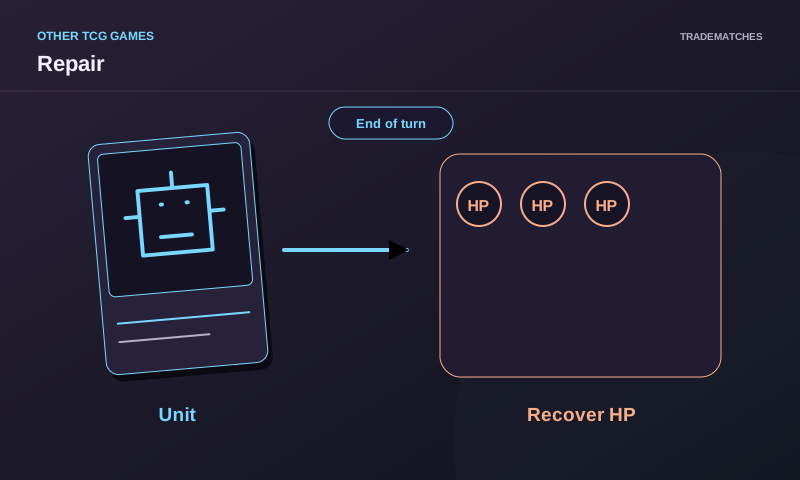
Gundam Repair: recovering HP at the end of your turn
Learn Gundam Repair: recover HP at the end of your turn, add values and check existing damage without raising maximum HP or saving Units already destroyed.
Infinite Impermanence: hand, column and resolution
Learn when Infinite Impermanence can activate from hand, what its column negation requires and how to check targets and Chain resolution correctly.
Lorcana Collector Boosters: Illustrious in 2027
Review Lorcana Collector Boosters and serialized Illustrious announced for 2027: confirmed contents and information still pending before buying packs.
Lorcana ink drops: temporary ink from Hyperia City
Learn how announced Hyperia City ink drops work: consumable ink, effects generating it and differences from permanent inkwell cards before release.
Magic dungeons and initiative: how to advance
Distinguish venturing into a dungeon from the Undercity, track your own route and understand how initiative is gained and transferred during a game.
Magic mutate: the top card and retained abilities
Learn Magic mutate: non-Human targets, the top card, abilities retained by the merged creature and what happens when the combined pile leaves the field.
Magic ninjutsu versus sneak: entering versus casting
Compare ninjutsu and sneak in Magic: what you return as a cost, when you can use them and why entering attacking differs from casting a creature spell.
Missing cards in a Cardmarket order: resolving it
Document missing cards in a Cardmarket order, contact the seller and agree an additional shipment or refund with clear evidence and follow-up checks.
One Piece EB-05: Heroines Edition vol.2 buying guide
Review the One Piece EB-05 Heroines Edition vol.2 announcement: English release, card types and regional differences before reserving packs or boxes.
One Piece face-up Life: what changes and what does not
Understand face-up Life in One Piece: visible information, card order, Trigger and effects adding cards without turning them into Characters in play.
Pokémon Fossils: Trainers played as Basic Pokémon
Learn when a Fossil is a Trainer or a Basic Pokémon, how that affects game setup and which evolution instructions to check before playing each card.
Pokémon GX attacks: one shared use per game
Understand the one GX attack per player per game, its costs and TAG TEAM extra Energy conditions without confusing ordinary attacks or separate markers.
Pokémon Poisoned and Burned: counters and coin flips
Apply Poisoned and Burned during Pokémon Checkup: counters, coin flips, combined conditions and ways to remove them without confusing attack damage.
PVC or polypropylene card sleeves: reading the material
Compare flexible PVC and polypropylene card sleeves: materials, plasticizers, fit and what PVC-free or acid-free labels actually establish for storage.
Riftbound Tank: assigning lethal damage first
Assign Riftbound combat damage with Tank: meet lethal thresholds on every Tank unit before distributing damage to units without the keyword in combat.
Riftbound Vision: looking and recycling without drawing
Resolve Riftbound Vision: look at the top of your deck, decide whether to recycle and handle multiple triggers without confusing Predict with drawing.
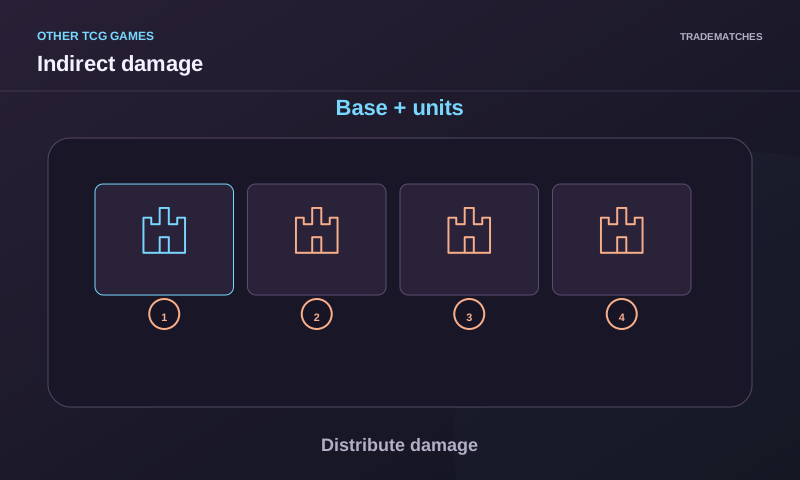
Star Wars Unlimited indirect damage: how to assign it
Assign Star Wars Unlimited indirect damage among your base and units: HP limits, simultaneous resolution and how damage interacts with Shield tokens.
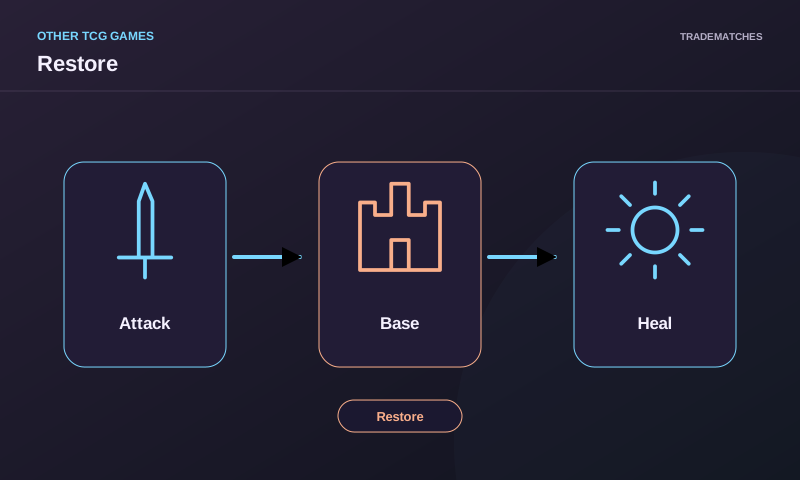
Star Wars Unlimited Restore: healing your base on attack
Resolve Star Wars Unlimited Restore when an attack begins: add values, remove damage from your base and distinguish healing from increasing maximum HP.
A good collection starts with clear answers.
Answers to help you find your way through the guides.
Where should I start if I’m new to collecting?
Choose your game, then define your goal: playing, completing a set or trading duplicates. Each category brings related guides together.
How do I identify the card I want to trade?
Record its set, number, language, finish and condition. Confirm those details with the other collector and use photos of the actual copy.
How do I prepare a trade?
List what you can offer and what you want. Agree on the exact copies, their condition and the delivery method before confirming.
Can I search all the articles?
Yes. The explorer searches the complete catalogue, including articles on other pages. Combine a keyword with a game or topic to narrow the results.
Do all games in the blog appear in the app?
The blog covers more games than the app. TradeMatches supports Pokémon, Magic, Yu-Gi-Oh!, One Piece, Lorcana and Riftbound.
More knowledge. Better trades.
Browse the articles, explore a category or get to know the project.